
Set for Success
Christophe Brachet
Quiet on set! It’s a phrase that’s synonymous with movie productions around the world, and one that used to see set photographer, Christophe Brachet, reaching for a modified underwater housing to soundproof his shutter.
But thanks to completely silent electronic shutters, like those pioneered in Sony’s full-frame Alpha mirrorless cameras, the task of creating publicity stills without disturbing actors and crew became a lot easier. And while he still needs to operate with care and courtesy, Christophe now gets to put all his attention into the creativity of set photography.
Which brings us to one of his latest projects, a new version of the TV show Zorro. “The new series will be released in September 2024,” he explains, “and was filmed from November 2023 to March 2024 in Madrid and Almeria in Spain.”
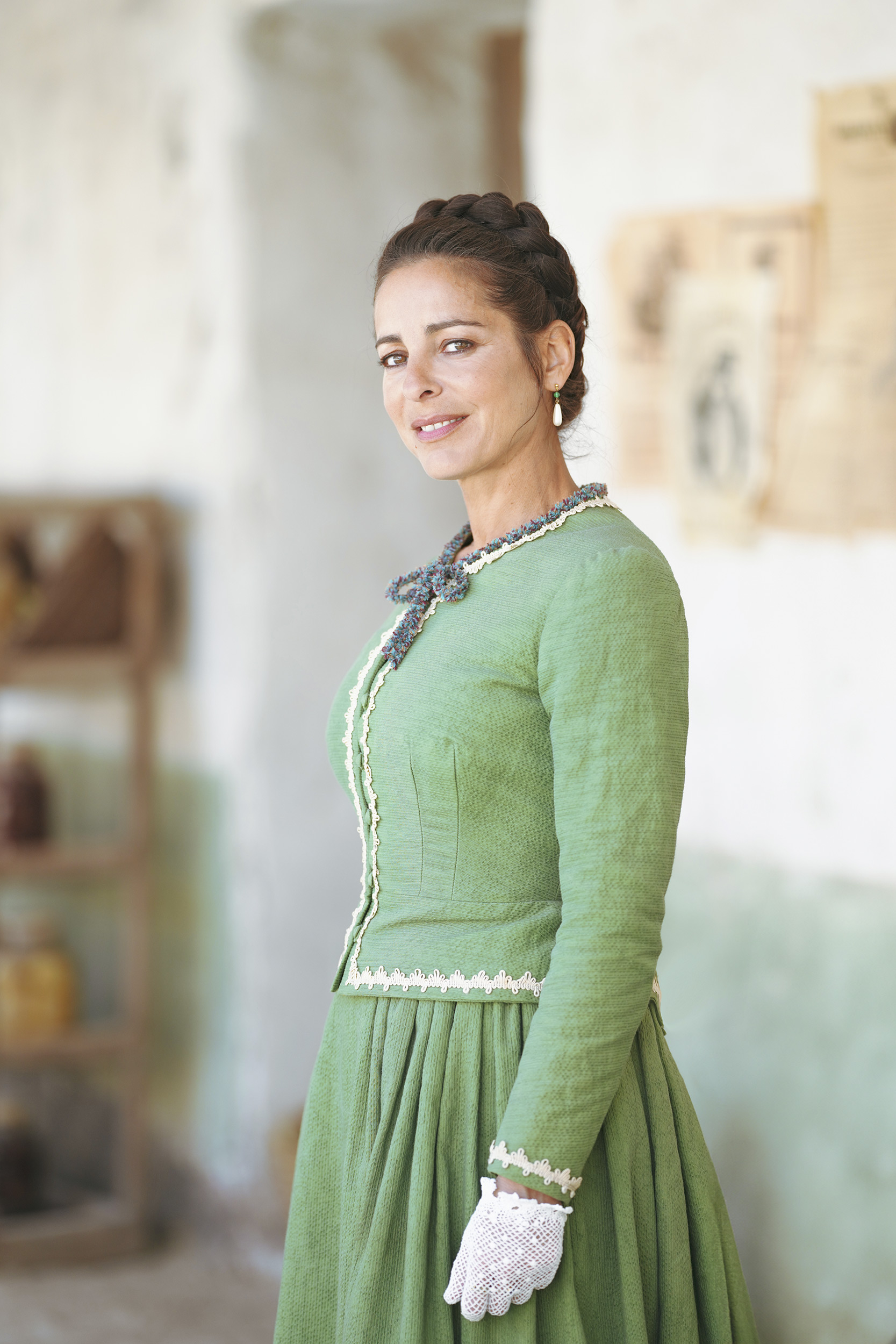 © Christophe Brachet | Sony α1 + FE 135mm f/1.8 GM | 1/1250s @ f/1.8, ISO 250
“My main objective is to create images that make people want to see the film or TV show,” he continues, “and just as it is for the actors and the technicians, what helps with that is reading the script! That research allows me to understand the intentions and emotions of particular scenes and therefore to photograph them more effectively. If I can make images that are even more impactful than the screengrabs from the main camera, then that’s even better. I also take behind-the-scenes photos and I have total freedom to create what I want on set.”
To make photos that closely follow the artistic intentions of the director, director of photography and other creatives involved in the process, colour is very important, Christophe says. “The grading must be as close as possible to what the film calibration will be, so I work in close collaboration with the cinematographer, making sure I’m using similar settings in terms of white balance, colour and exposure.”
 © Christophe Brachet | Sony α1 + 85mm f/1.8 | 1/200s @ f/1.8, ISO 2000
This consistency also means working with similar focal lengths to the classics used in filmmaking, Christophe reports. “My favourite lenses for set photographers are close in framing to those used by the crew. I use the FE 24mm f/1.4 GM, FE 35mm f/1.4 GM, FE 50mm f/1.2 GM and FE 135mm f/1.8 GM. They render subjects and scenes in a way that looks similar to the footage, so they don’t jar with it and that makes for a better connection.”
“If I had to pick one of those lenses, my favourite would probably be the 135mm,” he admits. “I like to have the most beautiful blur in the background of my images, and working wide open, it delivers exactly that. It helps the actors stand out with impact and share their emotions with the viewer. That’s what locks people in.”
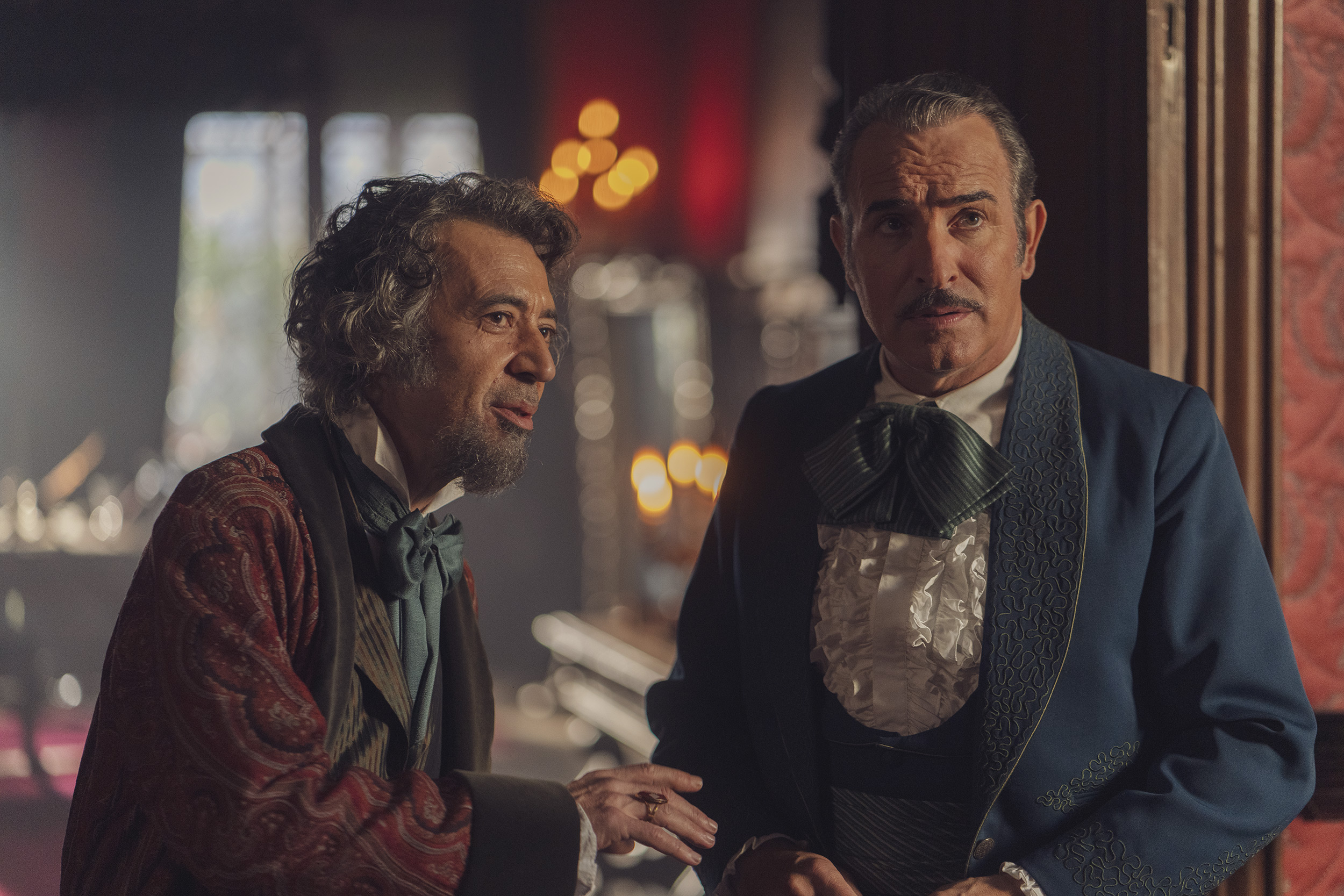 © Christophe Brachet | Sony α1 + 85mm f/1.8 | 1/200s @ f/1.8, ISO 2000
These fast lenses also make working in low-light much easier, “and that was particularly helpful on Zorro,” he says, “as a lot of the big action scenes took place in candle-lit haciendas. Thanks to my Alpha camera’s electronic viewfinder, I can also make sure the exposure is perfect when shooting. From the beginning of the Alpha series, I saw that advantage of hybrid technology, because photographers are much more effective when they can see in real time how a picture will look.”
Hot on the heels of Alpha advancements like the silent shutter and electronic viewfinder that’ve helped Christophe ply his trade, comes the global shutter in the Sony Alpha 9 III, which he used on set shooting Zorro along with an Alpha 1. “Achieving the first full-frame format camera with a global sensor, is an incredible feat,” he admits, “and it means we still have great adventures awaiting us.”
“One of global-shutter advantages is the ability to work with any type of light on set,” he continues, “because no matter what type of illumination is used, from high-end LEDs to affordable panels, the camera won’t pick up any flicker.”
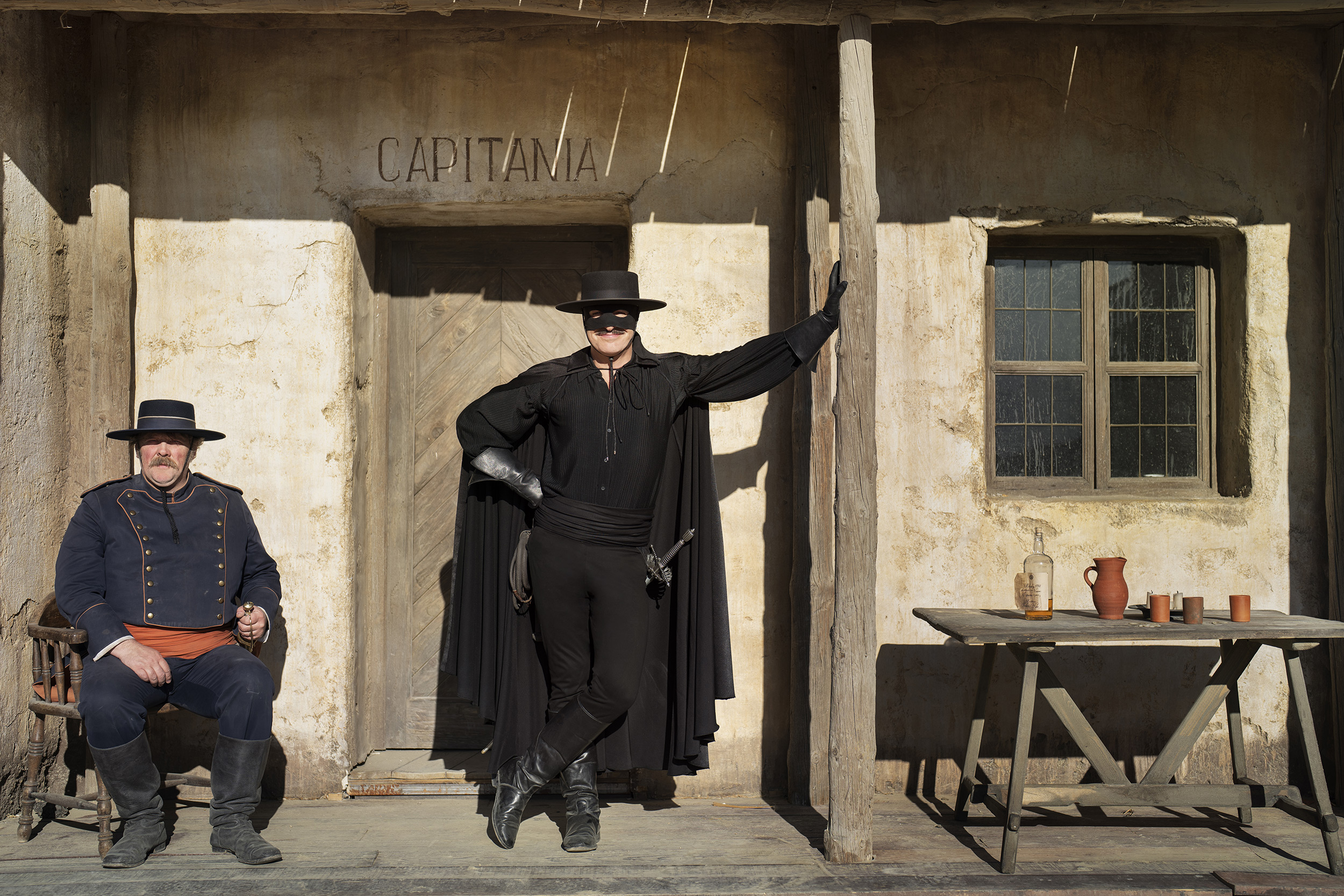 © Christophe Brachet | Sony α1 + FE 50mm f/1.2 GM | 1/2500s @ f/2.5, ISO 80
“And of course there are all the regular advantages of Alpha cameras like the amazing subject-tracking autofocus, the burst speed which allows you to select the perfect photo and dynamic range of the sensor which allows easier editing of highlights and shadows. When I’m shooting on set I can’t ask for take after take, just because the camera hasn’t focused, or exposed correctly, so all those things are vital.”
 © Christophe Brachet | Sony α1 + FE 135mm f/1.8 GM | 1/3200s @ f/1.8, ISO 1000
As with many areas of photographic work, in film production it’s not only the photographer who has the final say on which images are used. “The final selection is validated by the actors, director and producers, and for a project like this there will be around 100 in total from the thousands shot,” he finishes. “But if I were picking one for myself it would be the shot of Zorro galloping. Shot on the Alpha 1 and FE 135mm f/1.8 GM with the aperture wide open, he’s moving at speed, but the focus is perfectly on his eye. It’s a great example of how my Sony gear has never let me down.”
Featured products


Christophe Brachet | France
"What I like about my α7S is that it’s small and inconspicuous, allowing me to capture natural moments"


