
Shoot for the Moon
Albert Dros
Every time Albert Dros shares one of his landscape images of the moon, the comments of ‘That’s fake’ come flooding in. ‘The moon isn’t that big!’ is the usual cry, but Albert has the Sony Alpha 7R V raw files to prove it.
“All the pictures are single exposures - no focus stacking, no bracketing, nothing. People always think they are fake and the moon isn’t that big, but that is because most people haven’t looked through a lens with a 600mm or 800mm lens,” says Albert.
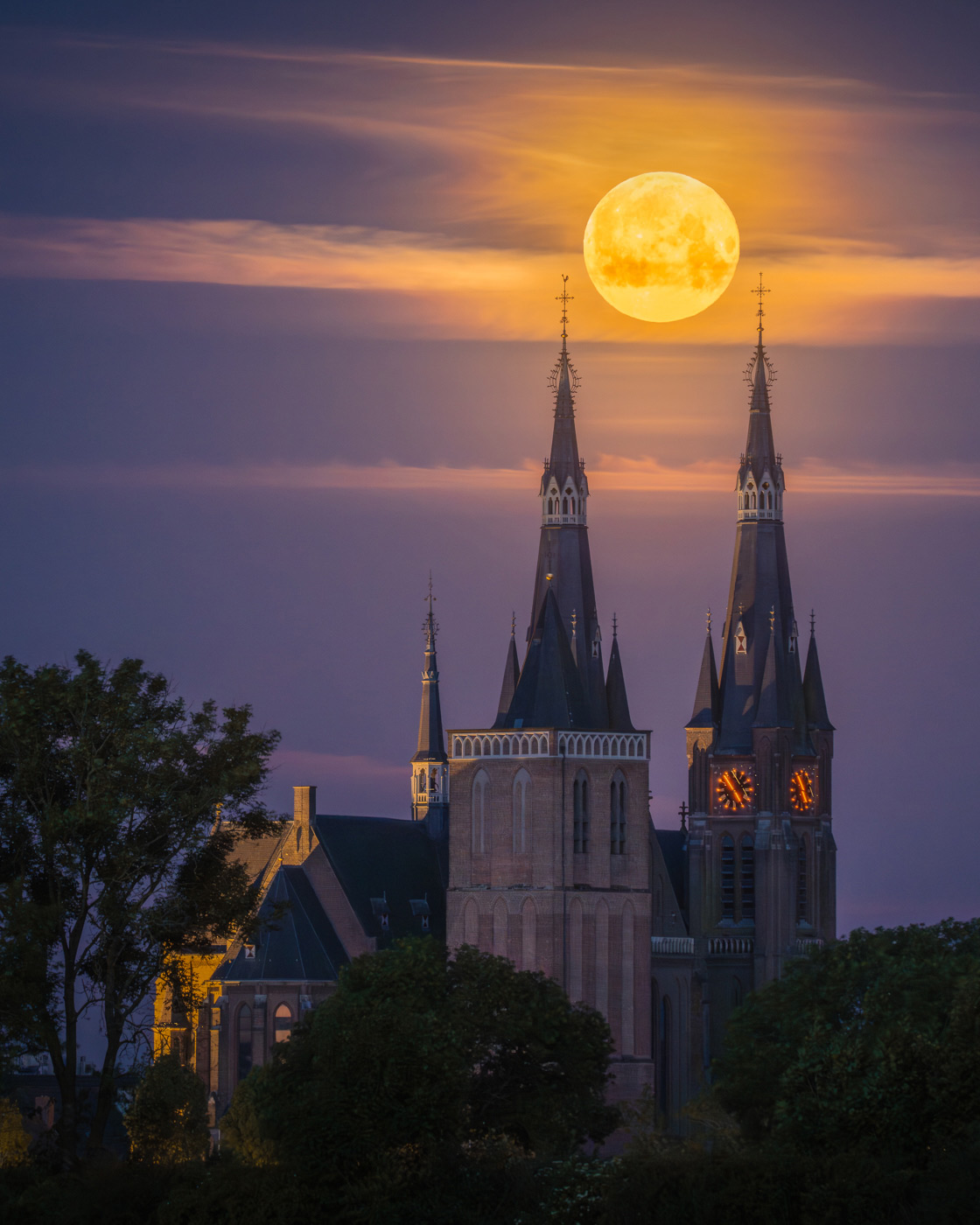 © Albert Dros | Sony α7R V + FE 100-400mm f/4.5-5.6 GM OSS | 1.6s @ f/14, ISO 640
It is a classic example of how a telephoto lens can produce a so-called ‘compression’ effect, where distant objects can seem closer together. It is the reason the moon looks so large in the image against a subject, such as a building, that we are used to seeing much closer. And that is key to the images. “In some of these shots, I was standing around 3km away from the building,” reveals Albert. “Over three kilometres, you start to get atmospheric distortions because of humidity. If I shoot from around two kilometres, everything remains sharp.”
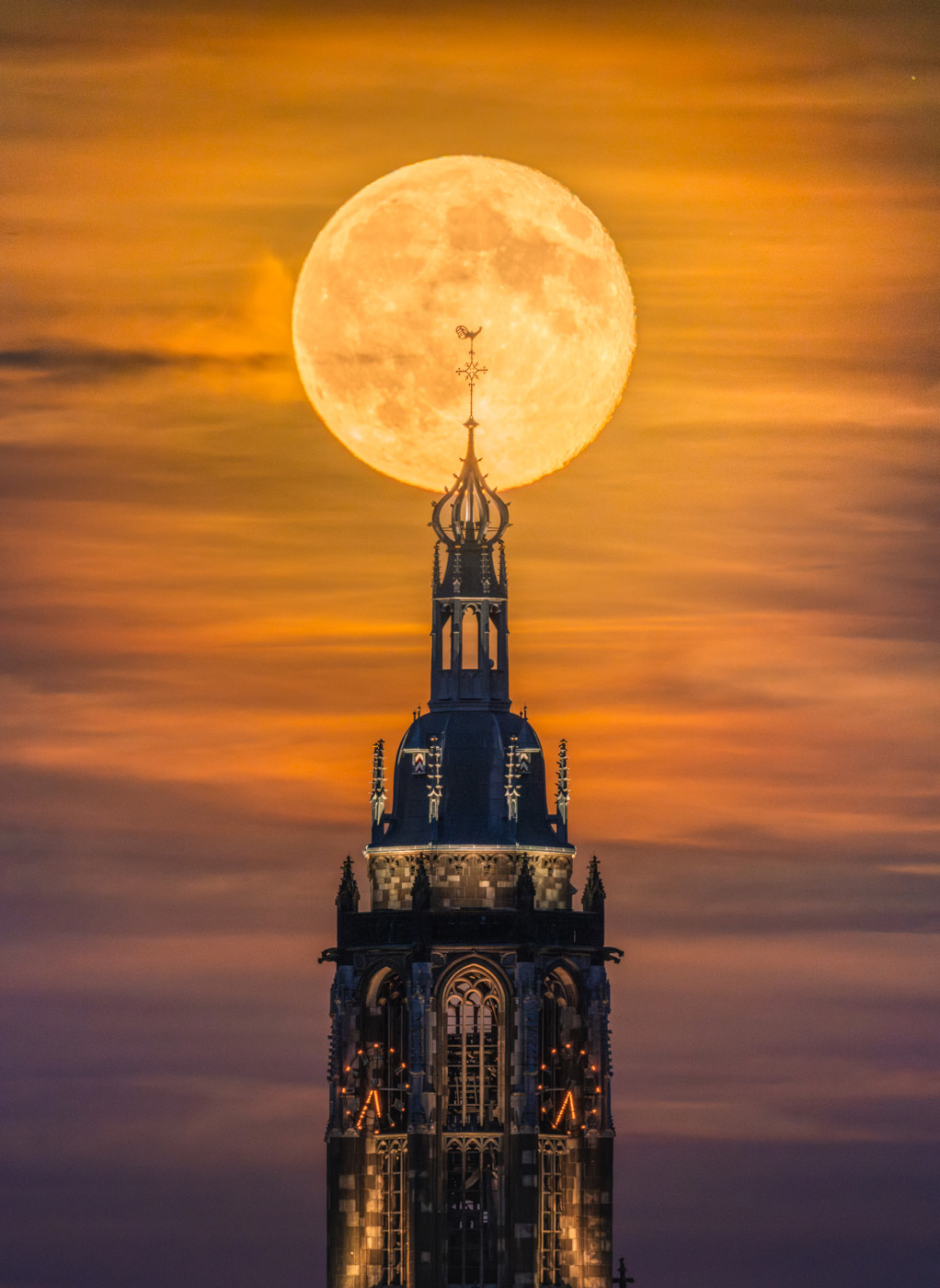 © Albert Dros | Sony α7R V + FE 400-800mm f/6.3-8 G OSS | 1/8s @ f/9.0, ISO 1600
To capture the extraordinary shots, Albert has previously used the FE 100-400mm f/4.5-5.6 GM OSS lens, often with the Sony 2x Teleconverter, and more recently uses the Sony FE 400-800mm f/6.3-8 G OSS lens. “This lens is great for moon shots. Most people assume it’s darkness, so you need a fast lens. But the opposite is true; the moon is so bright we don’t need a fast lens at all. In fact, I’m often using f/11 or f/14. At 800mm, I still want both the building and the moon sharp, so a smaller aperture is better.”
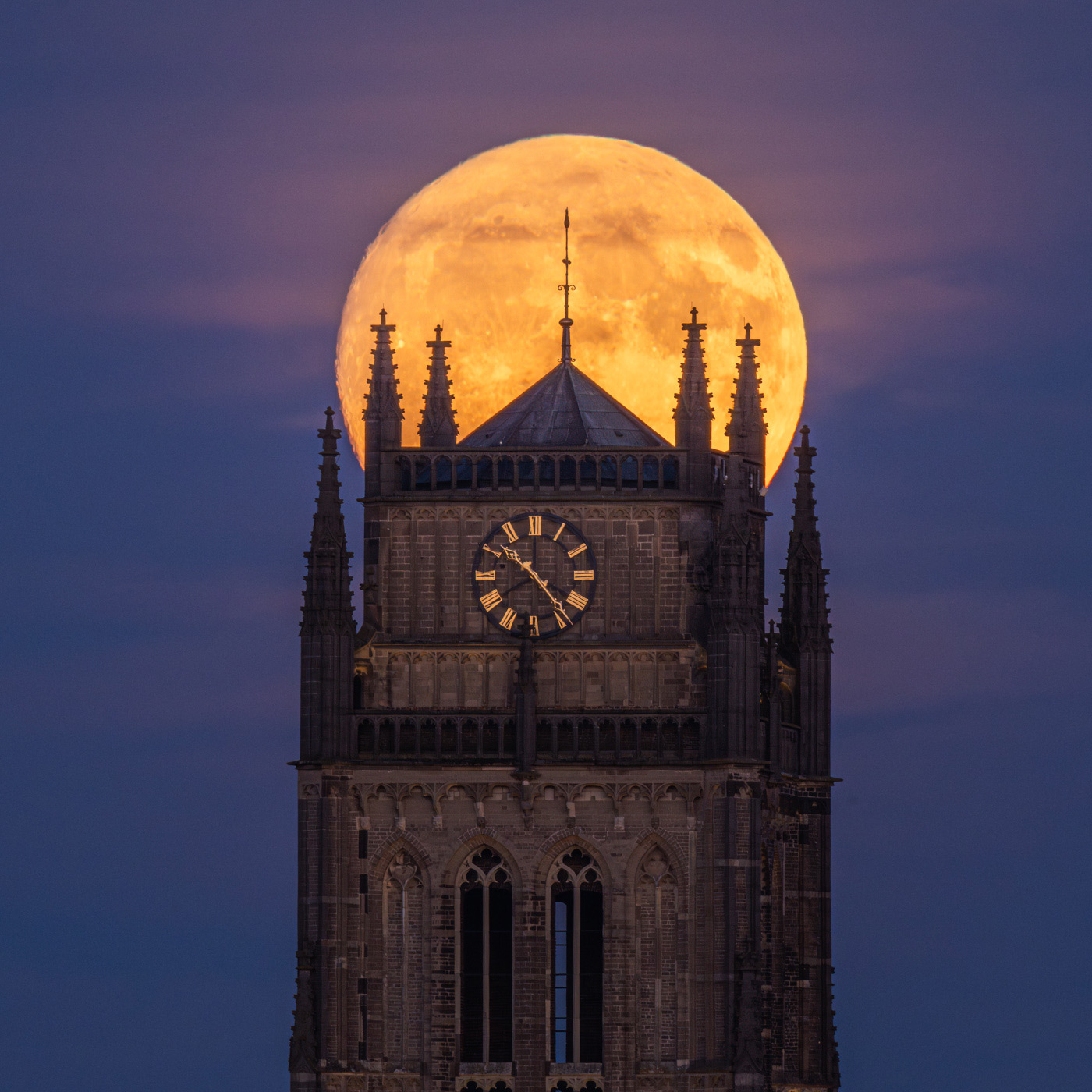 © Albert Dros | Sony α7R V + FE 400-800mm f/6.3-8 G OSS | 1/4s @ f/20, ISO 640
Albert mounts the 400-800mm lens on his Sony Alpha 7R V or Sony Alpha 1 II, then sets up on a tripod, using Silent Shutter and a remote to keep everything perfectly steady, which is essential using such long focal lengths. “I usually prefer the Alpha 7R V because it has a higher resolution. This allows me to shoot from far away at 800mm and still crop in a little more if I need to. A lot of people wouldn’t think to use the lens for moon photography, perhaps thinking it is just a wildlife lens. However, something like an FE 600mm f/4 GM OSS, perhaps with a teleconverter, is heavier, a lot more expensive, and when you account for the atmosphere, it won’t actually get you a better image.”
Although the chance to take full moon shots comes once a month, there is no spontaneity. Each shot is planned meticulously, many up to a year in advance. “I should say that for every one of these images, there are many failed attempts. Clouds, fog at the wrong level, alignments that weren’t 100% correct, buildings in the way. There is a lot of work in each attempt, and sometimes it works out, and sometimes it doesn’t,” explains Albert.
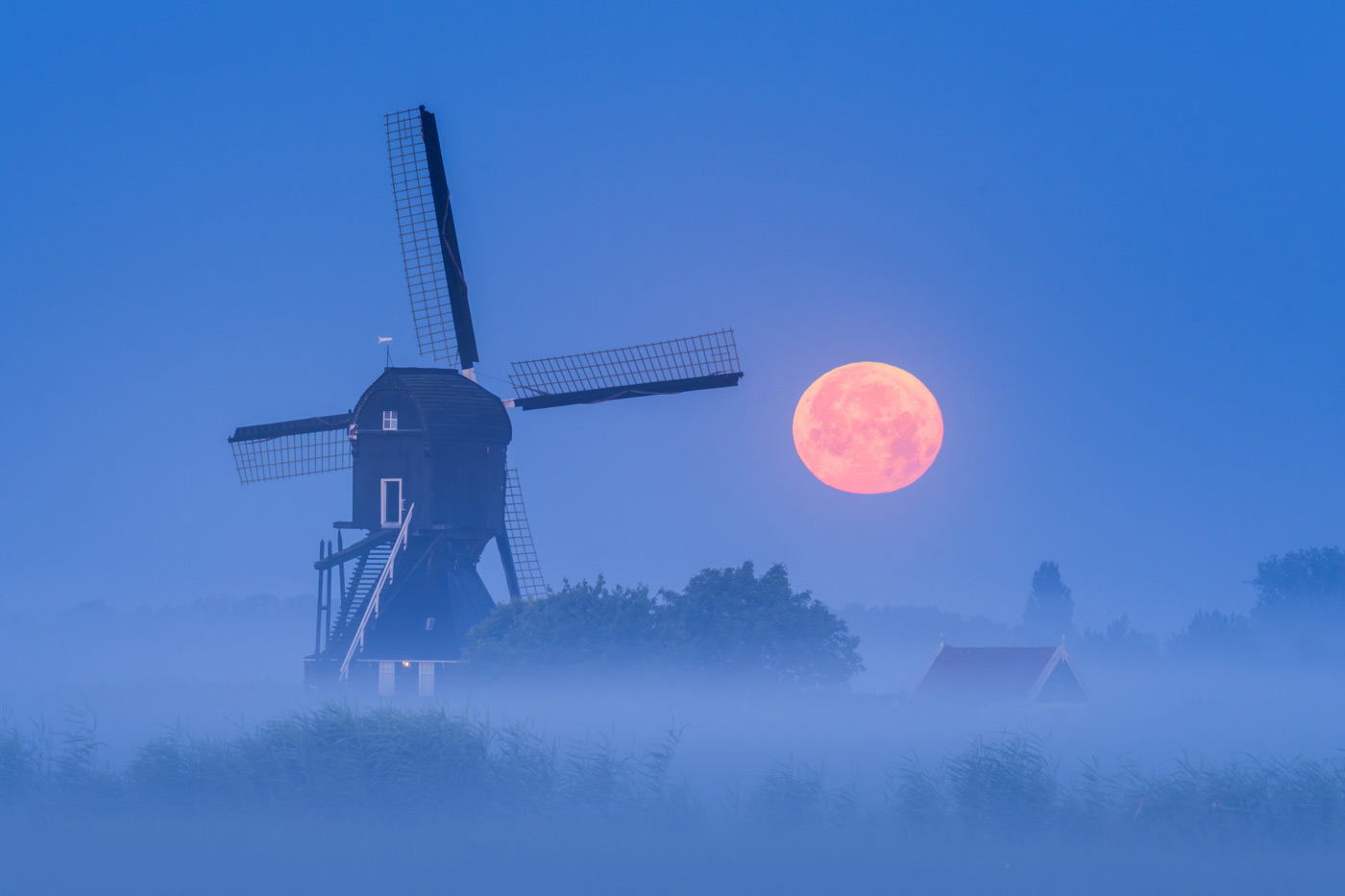 © Albert Dros | Sony α7R V + FE 400-800mm f/6.3-8 G OSS | 1/4s @ f/14, ISO 640
“I have a lot of shots in my head, and I even put them in my calendar sometimes a year in advance. I spend hours just researching on the internet - what are the good windmills, the good church towers, where are they? Then they must be objects that you can see from far away, preferably with open countryside. I often go and have a look at Google Street View and check the surroundings. Then I used an app to check the exact angle and see exactly where the sun and moon are setting on a particular day when it is full moon. I have a shot of a specific tower I wanted to take. It didn’t work out, and the next opportunity was a year later. Sometimes you need to wait a very long time.”
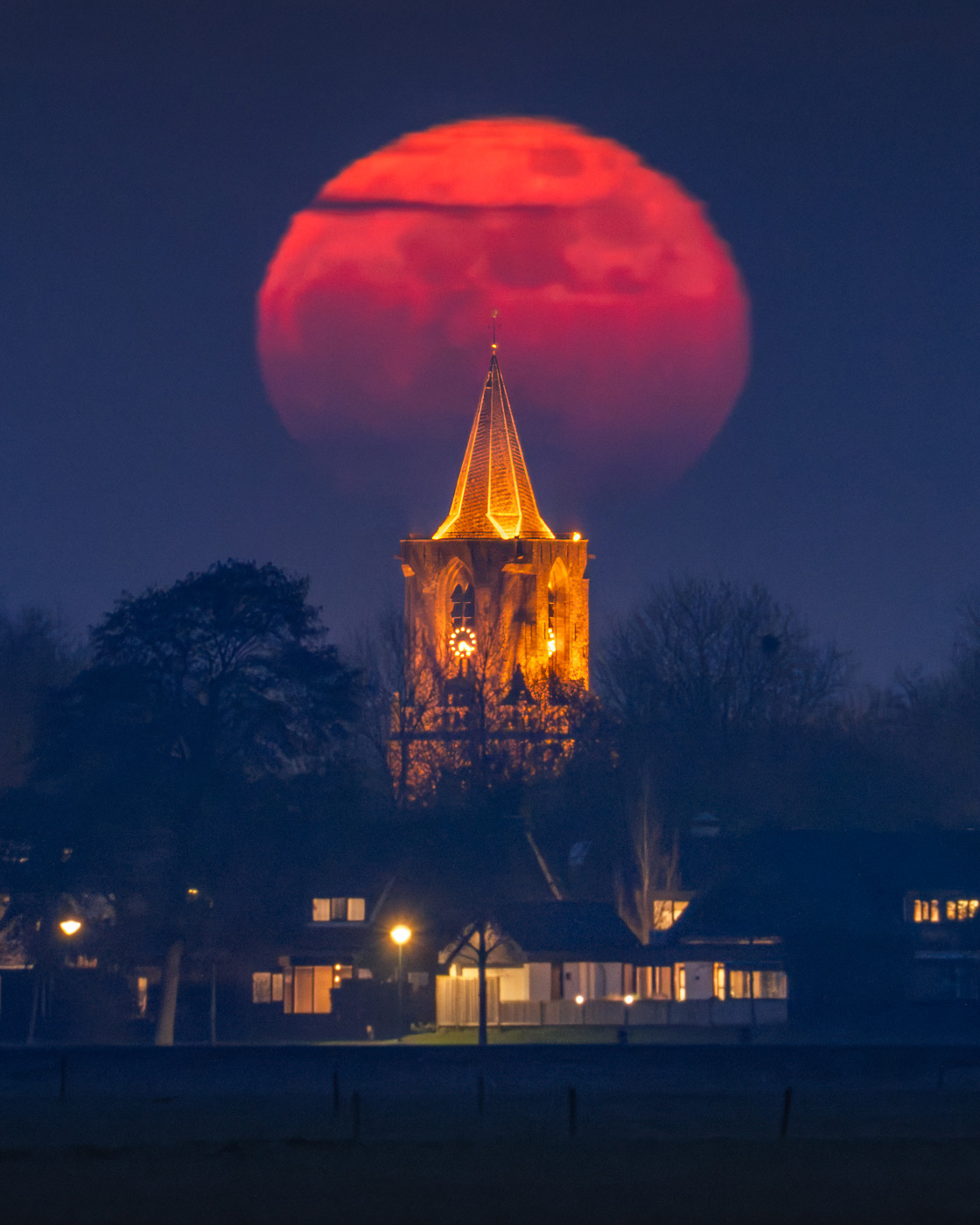 © Albert Dros | Sony α7R V + FE 400-800mm f/6.3-8 G OSS | 1.3s @ f/8.0, ISO 4000
So that the building in the shot is well lit, Albert shoots near sunrise or sunset, when the moon is always low in the sky. “You must have some ambient light so that you can take the shot in a single exposure. People often photograph the moon, which is so bright, while the landscape is dark. That is because it is too high in the sky - it is nighttime. You must get it when it is low to the horizon, when it is full, and then it must align with sunrise or sunset.”
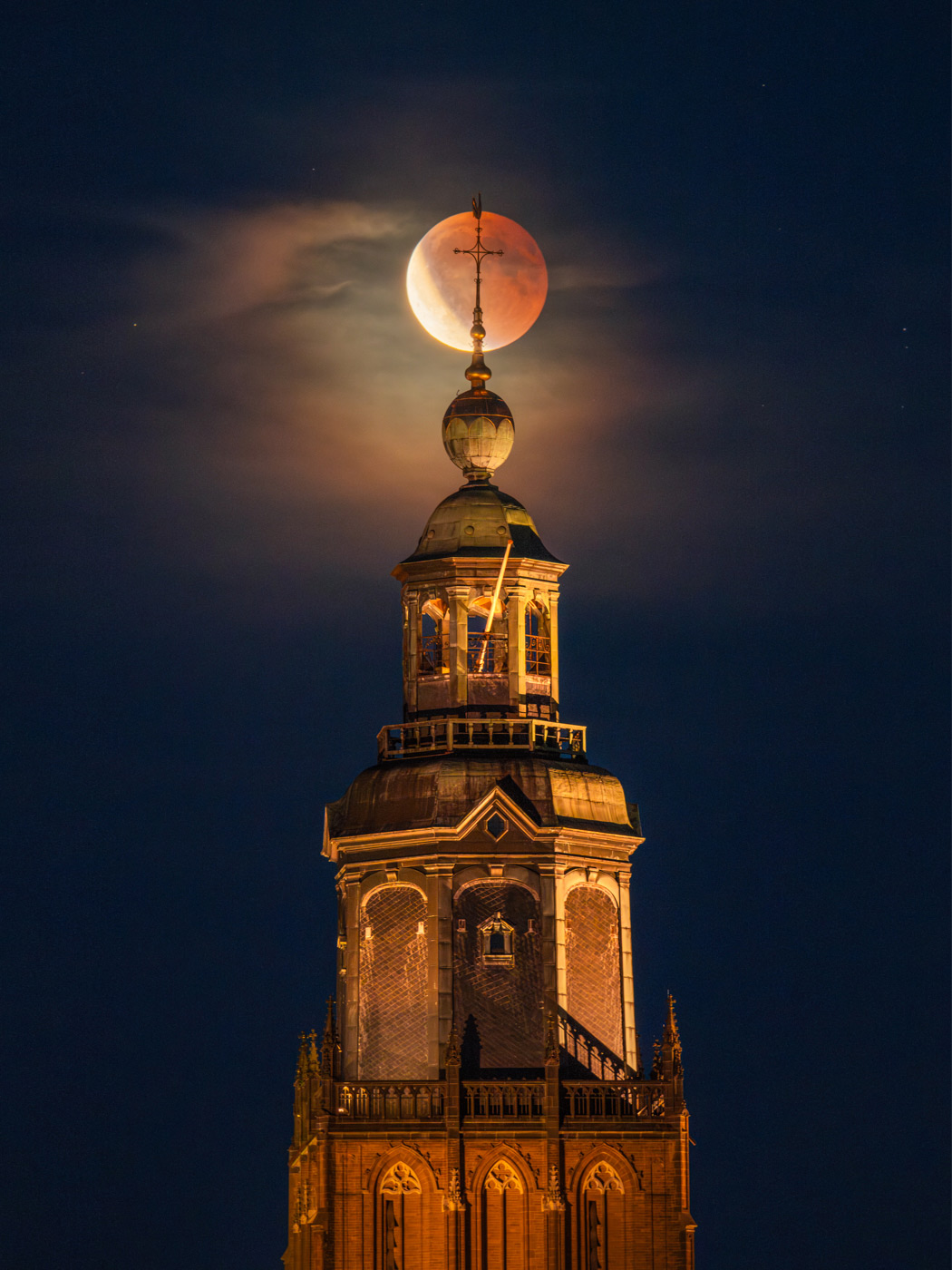 © Albert Dros | Sony α7R V + FE 400-800mm f/6.3-8 G OSS | 1s @ f/13, ISO 2000
With the Sony sensors in the Alpha 7R V and the Alpha 1 II, Albert can get the most out of the cameras’ dynamic range. “I often shoot slightly underexposed - exposing for the brightness of the moon, and then in editing, I brighten the shadows. The Sony cameras are known for their high dynamic range, and this makes these types of shots possible. Some of the images are shot at ISO 2000 or ISO 3200, where the dynamic range isn’t as high, so these types of shots get the absolute most out of the sensor,” he explains.
“There is something about the combination of spectacular nature and human-made elements that is always a great combination. It gives me something special - like nature’s painting, and we are capturing it.”
Featured products


Albert Dros | Netherlands
"I am obsessed with getting the perfect shot"


