
Stone Biter
Ismaele Tortella
Ismaele began as a wildlife photographer, with work published in international magazines and recognized by competitions such as Nikon and National Geographic. After moving to Tromsø, he focused on Arctic filmmaking. His first two short documentaries won awards at international festivals and aired on Italy’s national broadcaster, RAI. Arctic Blue, his debut feature, is in production with support from NFI, FFN, and others. It was developed through EsoDoc and Documentary Campus and won top prizes at North Pitch and Wildscreen 2024. In 2025, he premiered Stone Biter, a new short supported by My World Film Grant. He also works as a freelance cinematographer and drone pilot with BBC NHU, Silverback, Plimsoll, and DocLights, with work broadcast on Netflix, BBC Studios, SVT, NDR, and ORF.
What was the initial spark or inspiration behind your film?
The film began with a personal dream: to dive beneath the Arctic surface and film the wolffish among lush kelp forests. But what I found instead was a barren seafloor—stripped of life by an explosion of sea urchins. That shock became the spark. I felt compelled to understand what had happened and, more importantly, what was being done about it. That moment of disillusionment became the starting point for the story.
Can you tell us a bit about the story—what themes or emotions were you aiming to explore?
Stone Biter explores the tension between loss and hope. It's a journey through a disappearing ecosystem, but also a search for resilience - both human and ecological. I wanted to capture not just the environmental crisis, but the quiet determination of people who are trying to reverse it. It’s about bearing witness and choosing to act, even when the odds feel overwhelming.
 © Ismaele Tortella
How did the idea evolve from concept to script? Did the camera itself influence the story at all?
Originally, it was a simple wildlife story - just me, the wolffish, and the kelp. But as I started filming, the absence of life became the narrative. The camera became a tool not just to document, but to investigate. It led me to the divers, scientists, and communities working beneath the surface, both literally and metaphorically. The script grew out of that journey - more responsive than pre-planned.
What was the biggest challenge during production and how did the gear help solve it?
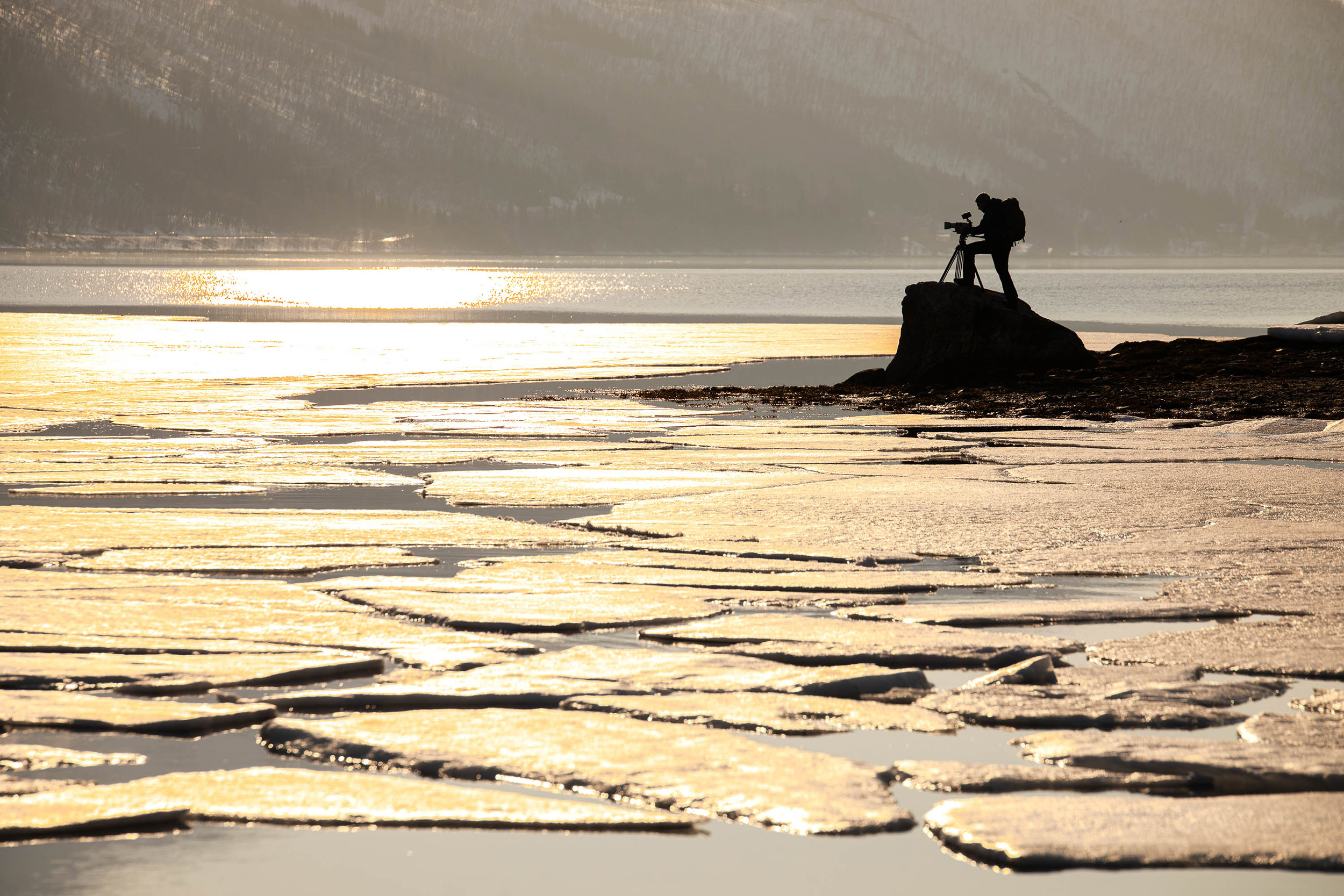
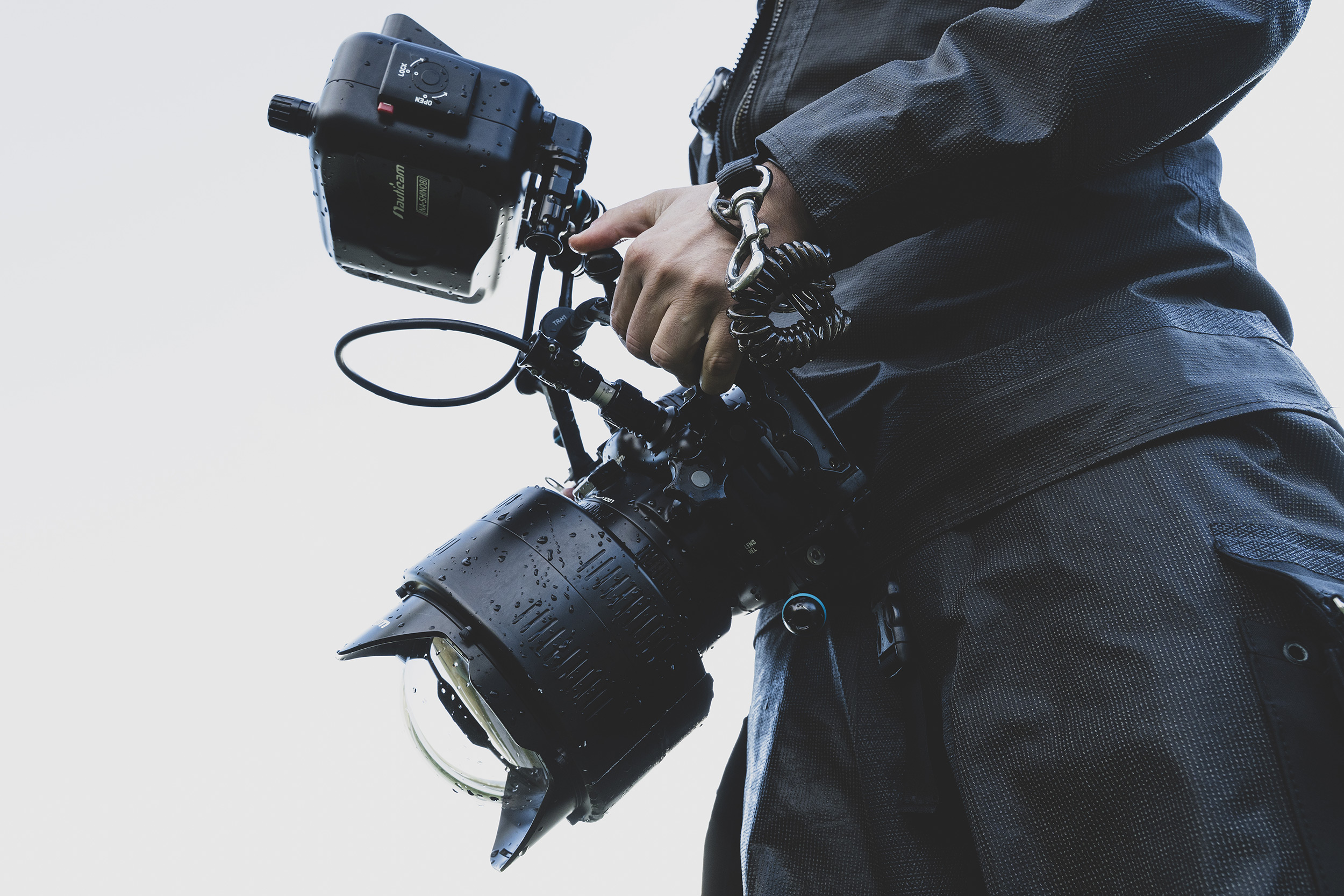
The biggest challenge was filming in Arctic waters - cold, unstable, and often with very limited visibility. Timing and preparation were everything. I relied heavily on lightweight, low-light-capable Sony cameras and compact underwater housings that allowed me to be fast, quiet, and responsive underwater. Without that kind of gear, I couldn’t have captured the delicate details of the ecosystem or the intimate moments with the people restoring it.
 © Ismaele Tortella
Were there any particular features of the camera that helped you achieve a specific look or mood?
Yes - creating a meditative, immersive visual tone was central to Stone Biter. Shooting in S-Log3 on both the Sony Alpha 7S III and Alpha 7 IV allowed me to retain detail in both shadows and highlights, giving me the flexibility to shape the film’s mood in post-production. I used the XAVC S-I codec, recording in 10-bit 4:2:2, which provided incredibly rich files for colour grading. The full-frame sensor’s depth of field control helped isolate delicate textures like drifting kelp and sea urchins, adding intimacy and emotional weight to each frame.
How did the camera perform in challenging conditions—low light, fast motion, cold environments?
The performance was exceptional. Underwater, I relied on the Alpha 7S III, where the dual native ISO (especially at 12,800) was a game changer. It allowed me to capture usable, detailed footage in extremely low light - essential in Arctic waters where natural light is minimal. Above water, the Alpha 7 IV’s autofocus tracking was incredibly accurate when following subjects in motion, such as local divers or scientists in action. I also appreciated the crop mode in 4K on the Alpha 7 IV - it let me quickly change focal lengths without changing lenses, adding flexibility to dynamic scenes.
 © Ismaele Tortella
Both cameras held up impressively in the cold Arctic environment. The Sony NP-FZ100 batteries were crucial - I could shoot extended sessions, even underwater, without worrying about battery failure due to freezing temperatures.
What kind of lens, microphone and rig setups did you use with the cameras? Did they unlock new visual possibilities?
I worked with a range of Sony lenses to give the film a strong visual range. For underwater work, the FE 28-70mm f/3.5-5.6 was compact and flexible. Above water, I used the FE 24-70mm f/2.8 GM II as my workhorse lens for both interviews and observational scenes, while the FE 100-400mm f/4.5-5.6 GM OSS, paired with the Sony 1.4x teleconverter, allowed me to compress landscapes and capture distant wildlife behaviour. The sharpness, stabilisation, and fast autofocus across all these lenses were key to adapting quickly in the field - whether on land, from a boat, or underwater.
For sound, I used the Sony ECM-B10 microphone, which delivered surprisingly high-quality audio for such a compact form. Its lightweight design helped me maintain a fast, portable setup - crucial for a solo filmmaker working in unpredictable Arctic conditions. Having a compact, all-Sony system allowed me to stay mobile and responsive without compromising on quality.

How did the image quality and colour science support the tone of your film?
Sony’s colour science delivered the natural, understated palette I was aiming for. In the Arctic, light is often soft, diffused, and low in contrast - conditions that require subtle handling. The cameras rendered these tones beautifully, especially skin tones and underwater hues. The files were robust enough to give me full creative control in grading while staying true to the environment. That realism was essential to communicating the quiet urgency of the story - one of loss, resilience, and fragile hope.
What advice would you give to other filmmakers looking to experiment with Sony gear?
Trust the system - it’s built for flexibility and creativity. Whether you’re shooting in the middle of a city or under the Arctic ice, Sony gear gives you tools that adapt to your vision without getting in the way. My advice: learn how to get the most out of features like S-Log3, dual ISO, 4K crop mode, and real-time autofocus - they can open new possibilities, especially in fast-changing or remote environments. Also, don’t underestimate the power of battery life and portability, especially if you’re shooting in extreme conditions. The more the gear disappears, the more you can focus on telling the story.
Credits
Behind the scenes video
- Photography: Ismaele Tortella
- Additional Photography: Richard L. Butler, Babang Deshomme, Luke Nelson
Beauty video
- Photography: Ismaele Tortella
- Additional Photography: Babang Deshomme
- Original Music: Alexander Leeming Froudakis & Manuela Lubrano


