
Small Lens, Big Impact
Albert Dros
I think I must be one of the few people who has been asking Sony for a fisheye lens for years, so when they finally delivered one, I was very happy. And when they asked me to try it out, I was even happier.
Fisheye lenses are quite niche, especially for landscapes and cityscapes. All that curvature is not always easy to work with, and it is definitely not a lens you can use for everything. But that is also what makes it so interesting. The trick is not to fight the effect, but to use it to your advantage.
That is exactly what I want to show in this article: how to use the Sony FE 8-14mm f/3.5 Fisheye G creatively, and how it can help you make photos you would normally not be able to take.
The first thing I noticed is how small this lens is. It weighs only around 300 grams, which is very light for something this unique. That completely changes the question of “should I bring this lens?” into simply keeping it in your bag all the time.
And that is important with a fisheye. You might not use it for every shot, but when the right scene appears, it can give you that one special extra image. Because it is so small and light, there is almost no reason not to take it with you.
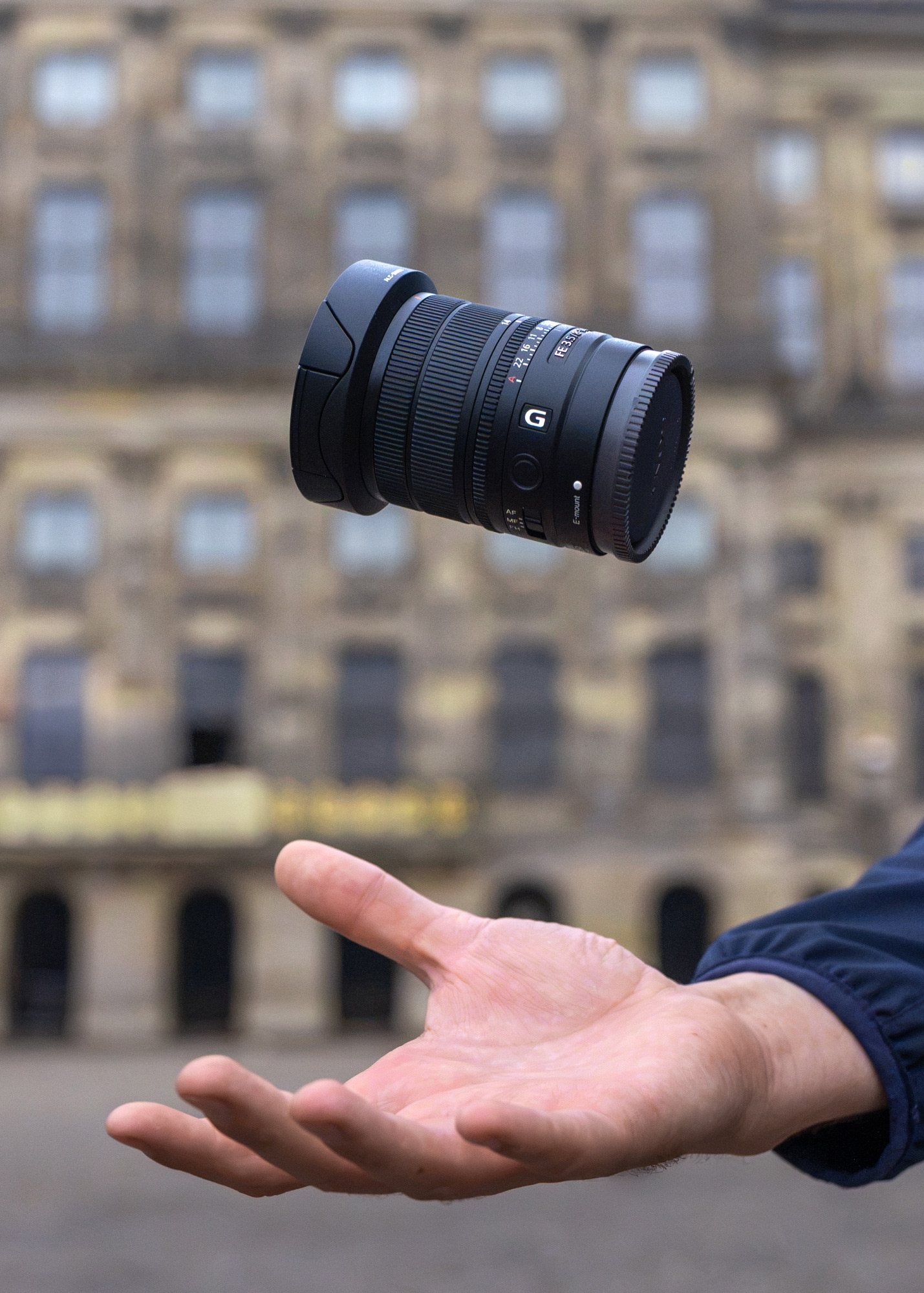 © Albert Dros
Two lenses in one
This is also a zoom lens, which makes it even more versatile. Zoomed in, you get a diagonal fisheye image that fills the frame. It still looks extremely wide, but it can also read as a dramatic landscape or cityscape photo.
When you zoom out, the image circle starts to appear. Keep going, and you end up with the full round fisheye image. That is a very strong effect, and it takes some time to get used to. At first you might think, “I will never use this.” But once you force yourself to see the world with it, it becomes addictive. Suddenly, the angles feel endless.
Seeing ordinary places differently
This lens really encourages you to get creative. Try strange angles, tilt the camera, spin it, get low, look up, and suddenly very ordinary things can become really interesting photos.
I tried the lens at Arnhem Centraal station in the Netherlands, for example, and came away with these super futuristic shots of all the lines and curves. The architecture there already has a strong shape, but the fisheye exaggerates it in a really fun way.
Every now and then I placed people in the frame to make the images feel less abstract That little human element can give the photo scale and make it easier to connect with.
Stations, parking garages, tunnels and modern architecture all work extremely well and beautifully. And then just move around. One step to the left or right can completely change the entire photo.
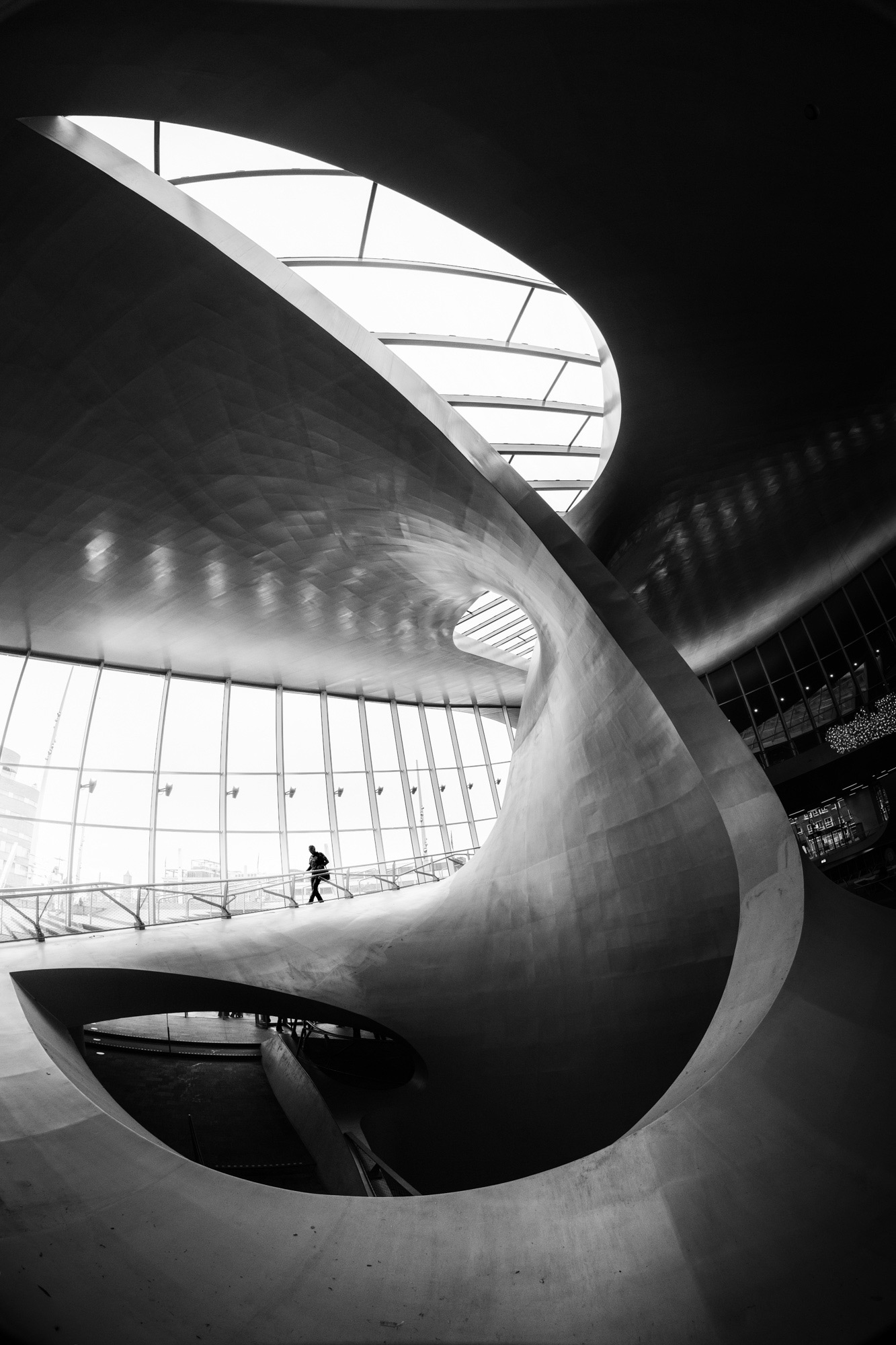 © Albert Dros | Sony α7R VI + FE 8-14mm f/3.5 Fisheye G | 1/200s @ f/7.1, ISO 500
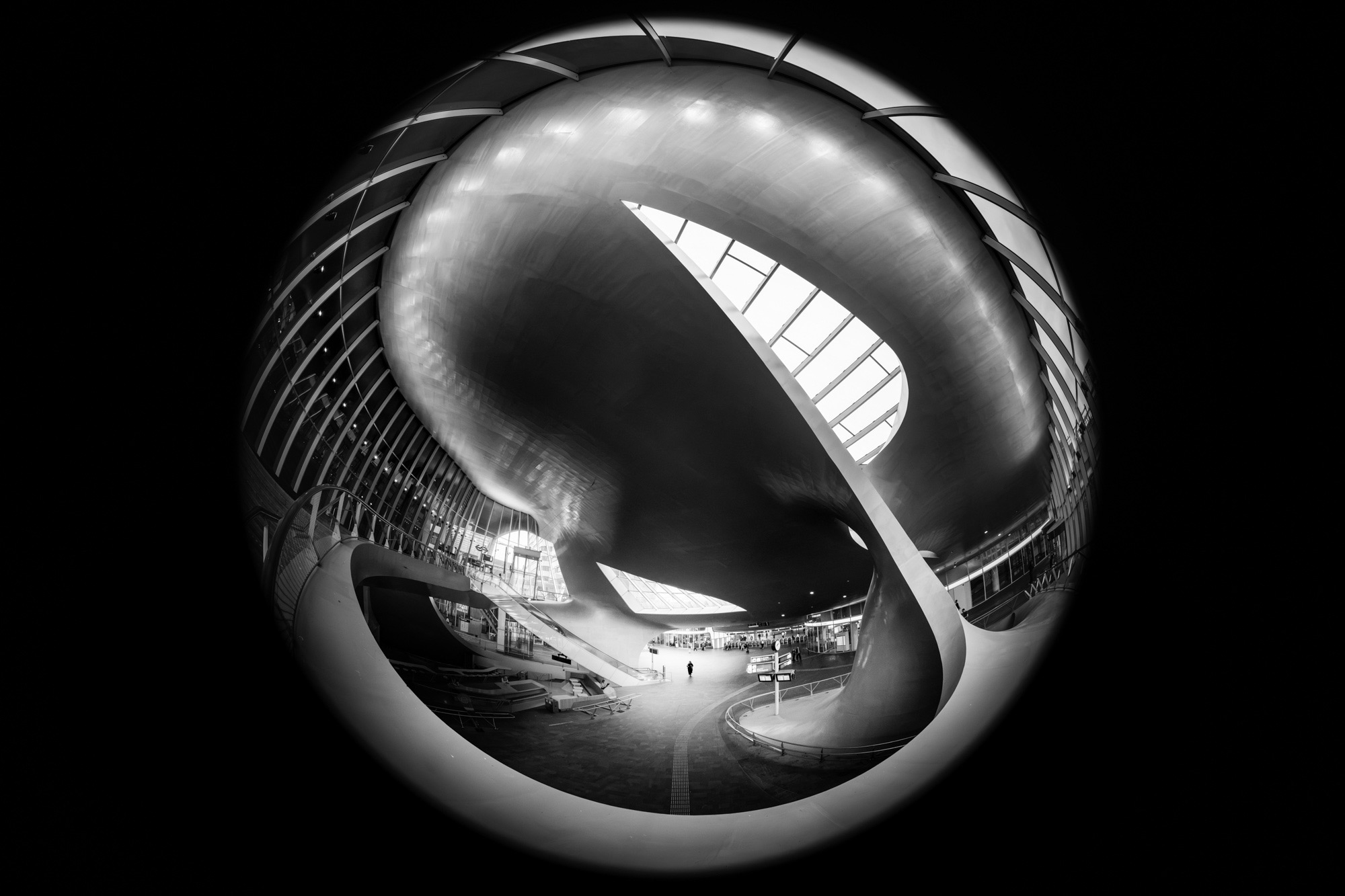 © Albert Dros | Sony α7R VI + FE 8-14mm f/3.5 Fisheye G | 1/160s @ f/8.0, ISO 800
From above
This lens is also great for very wide views, especially when you want to photograph a familiar scene from a more creative angle. I had a beautiful view over The Hague from De Haagse Toren. The view itself was already impressive, but the fisheye perspective gave me much more to play with.
I could include parts of the church itself in the frame, which made the shot feel more immersive. And of course, the classic looking-down shot from a tall building always works well. In one image, I managed to include the railing, the entire church, and even the clock if you look closely.
Photos like this feel very immersive and creative, which is something I really love in my photography.
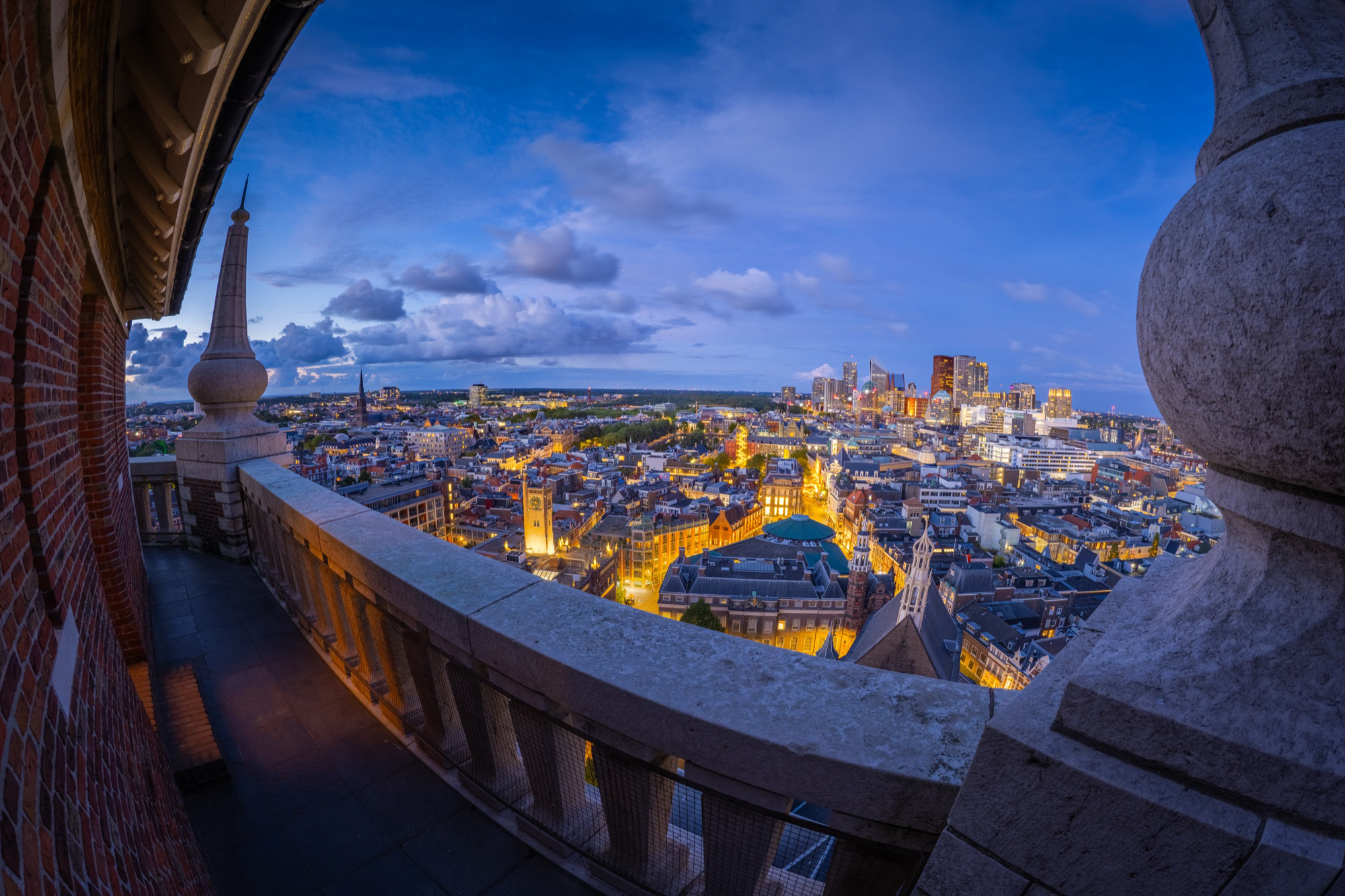 © Albert Dros | Sony α7R VI + FE 8-14mm f/3.5 Fisheye G | 0.8s @ f/8.0, ISO 200
A focusing distance of 0.15 metres
Another great feature is the minimum focusing distance of 0.15 metres. That means you can place subjects extremely close to the front element. It might not be your first thought for landscape photography, but once you start experimenting, the images you can create are crazy.
You do have to be careful at that distance. You are almost touching your subject, so it is very easy to cast your own shadow into the frame. And with an angle this wide, your feet or tripod legs can appear in the corners before you notice.
I often worked with the camera on the ground, composing with the tilting screen. Even then, sometimes my hair ended up in the top of the frame - it really is that wide!
Pigeons on Dam Square
I took the lens to Amsterdam and used the close focusing distance to photograph building on the Dam with pigeons right in the foreground.
It was a perspective I had not really seen before, and it worked very well with this lens. The pigeons became large and full of character, while the building remained clearly visible behind them. It created a fun, unusual cityscape that would have been impossible with a normal wide-angle lens.
For both modern and traditional cityscapes, the possibilities are endless. By using the lines, the close focus and the extreme perspective, you can create so many interesting shots. It is all about creativity.
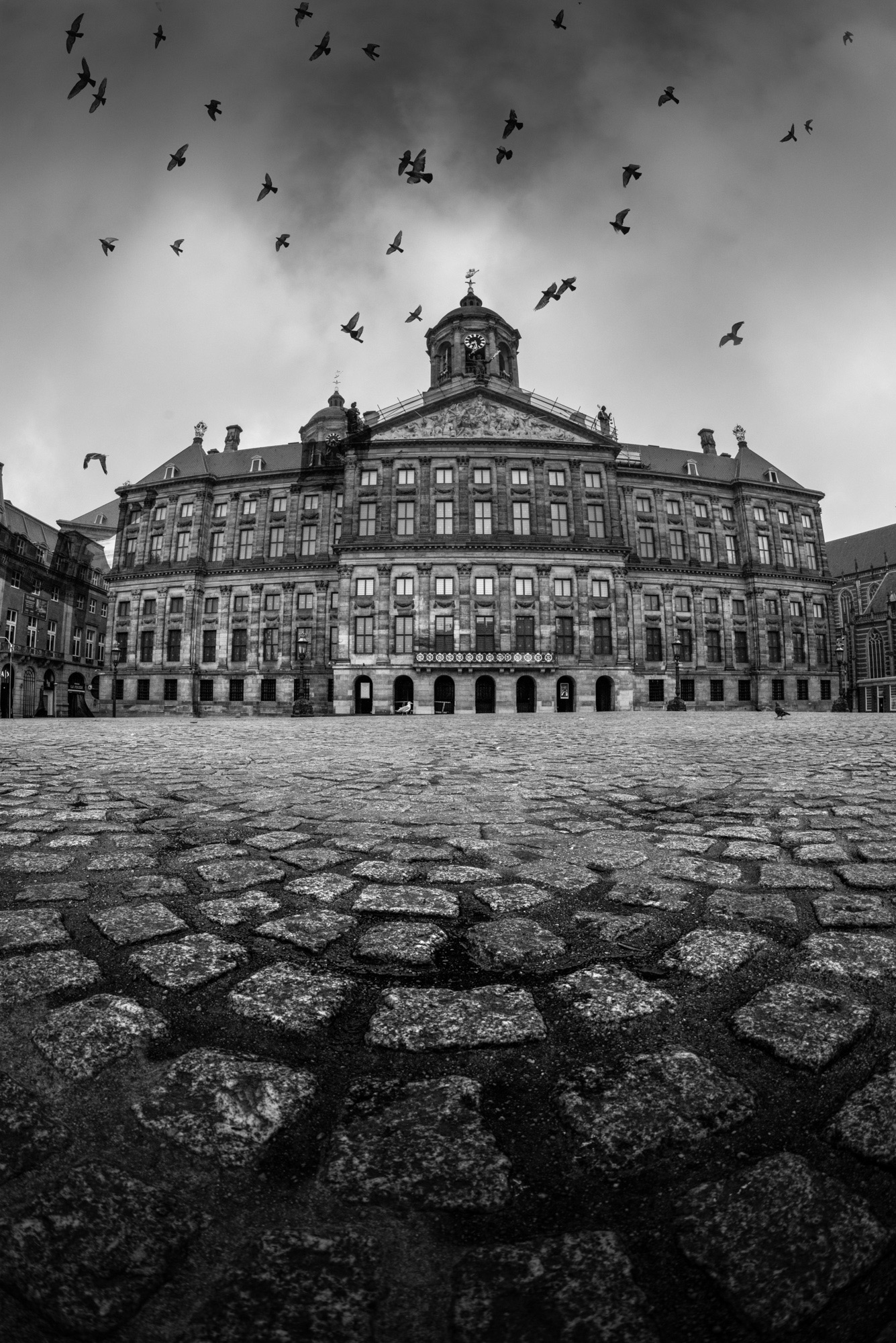 © Albert Dros | Sony α7R VI + FE 8-14mm f/3.5 Fisheye G | 1/160s @ f/13, ISO 500
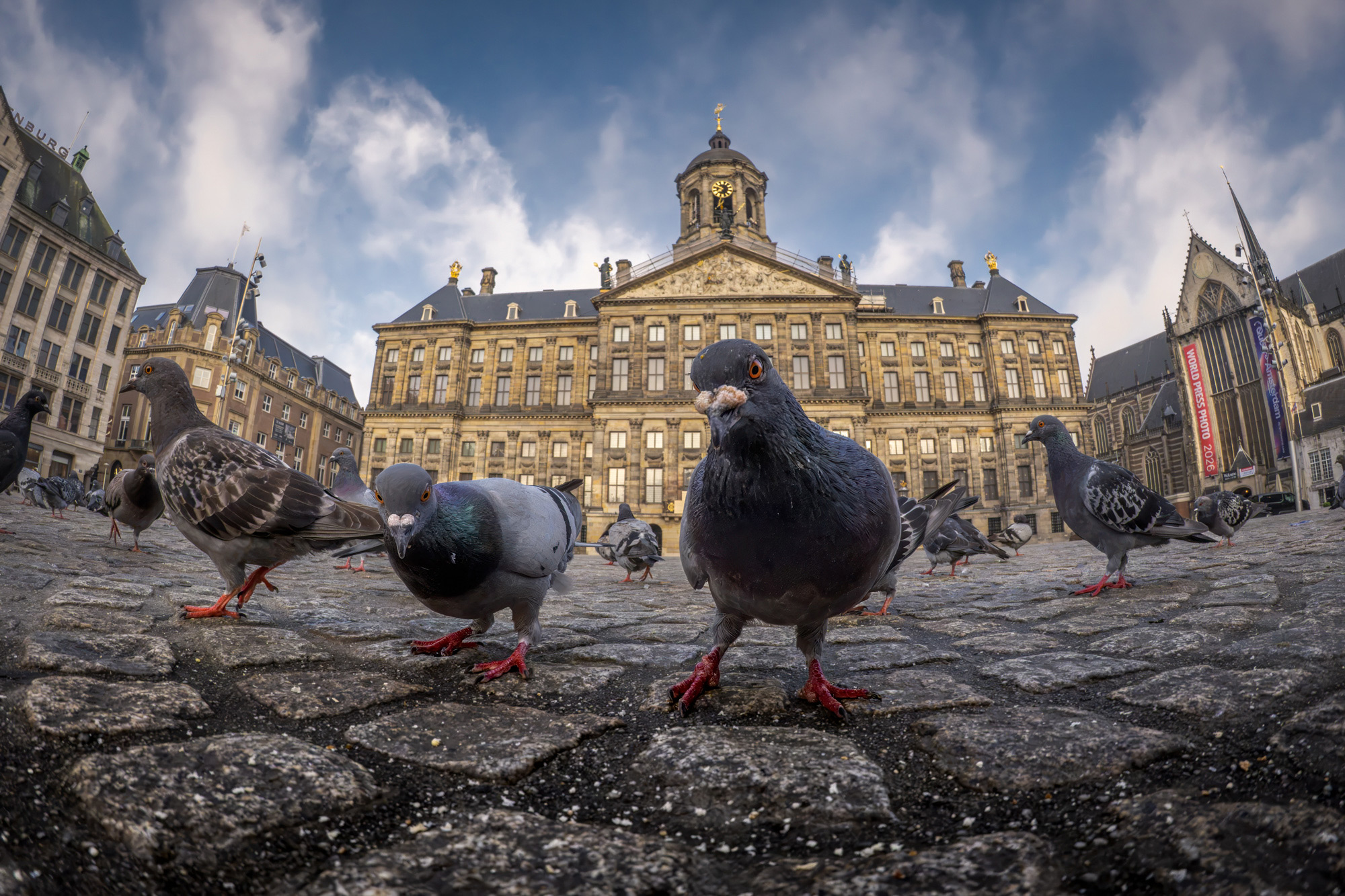 © Albert Dros | Sony α7R VI + FE 8-14mm f/3.5 Fisheye G | 1/1250s @ f/11, ISO 2500
A forest full of tentacles
Then I took the lens into the forest on a completely ordinary day. Forests can be difficult to photograph. I usually shoot them mostly with a telephoto lens, so using a fisheye was something completely different.
I started exploring strange angles, especially looking straight up into the trees. And I enjoyed myself so much. Photographing a tree from the very base and being able to include everything from the bottom to the top is just crazy. The branches started to look like tentacles reaching into the sky.
I came home with images I had never made before, and that is always exciting.
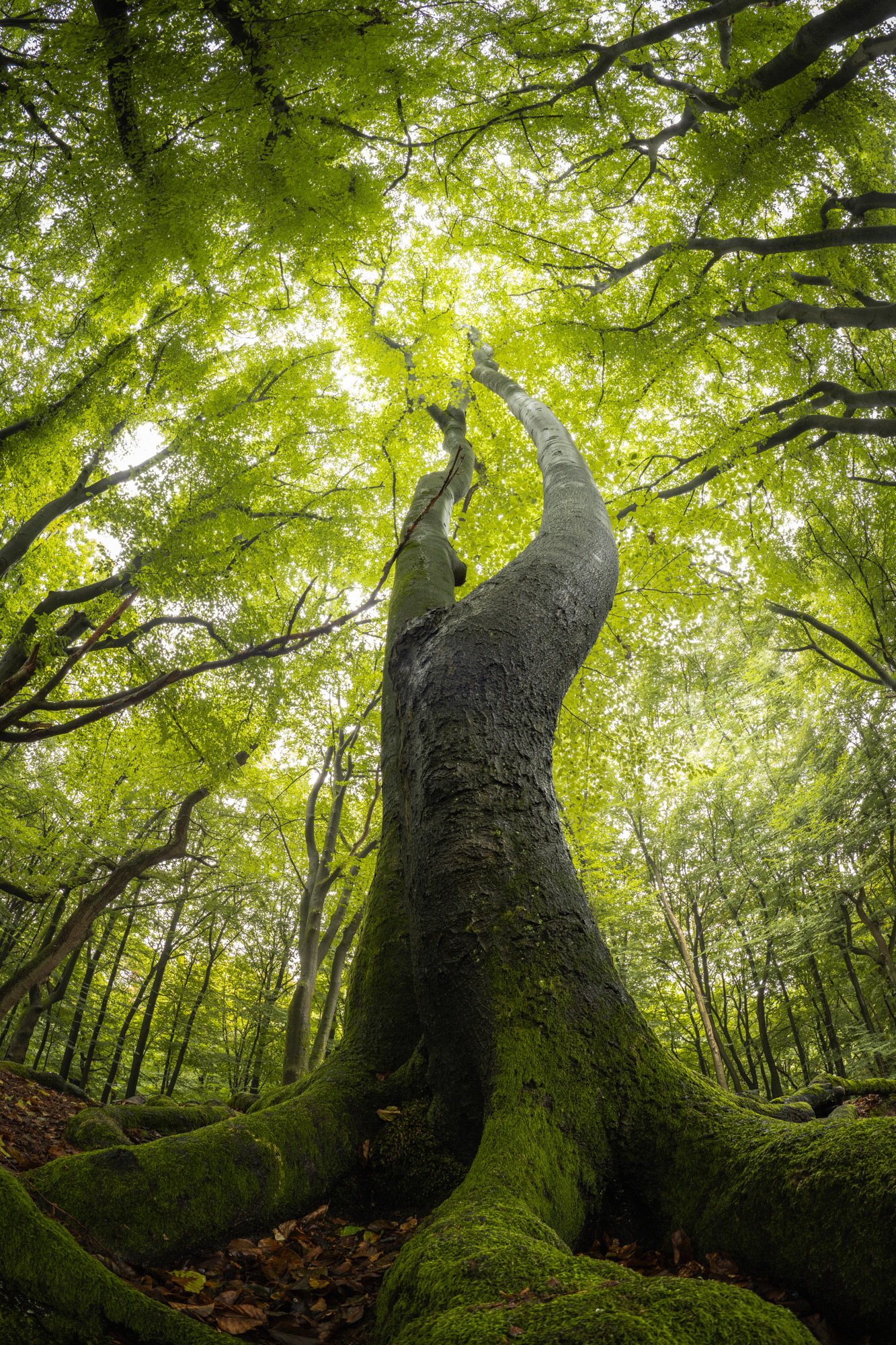 © Albert Dros | Sony α7R VI + FE 8-14mm f/3.5 Fisheye G | 1.6s @ f/11, ISO 200
A small opening that looks huge
There is a tree close to my house that I photograph from time to time. This lens encouraged me to try something completely new there.
By framing through some tree trunks, I could use a very small space to create a natural frame around the tree. In reality, the opening was tiny, but the super wide fisheye perspective made it look much bigger. It turned a familiar scene into something special.
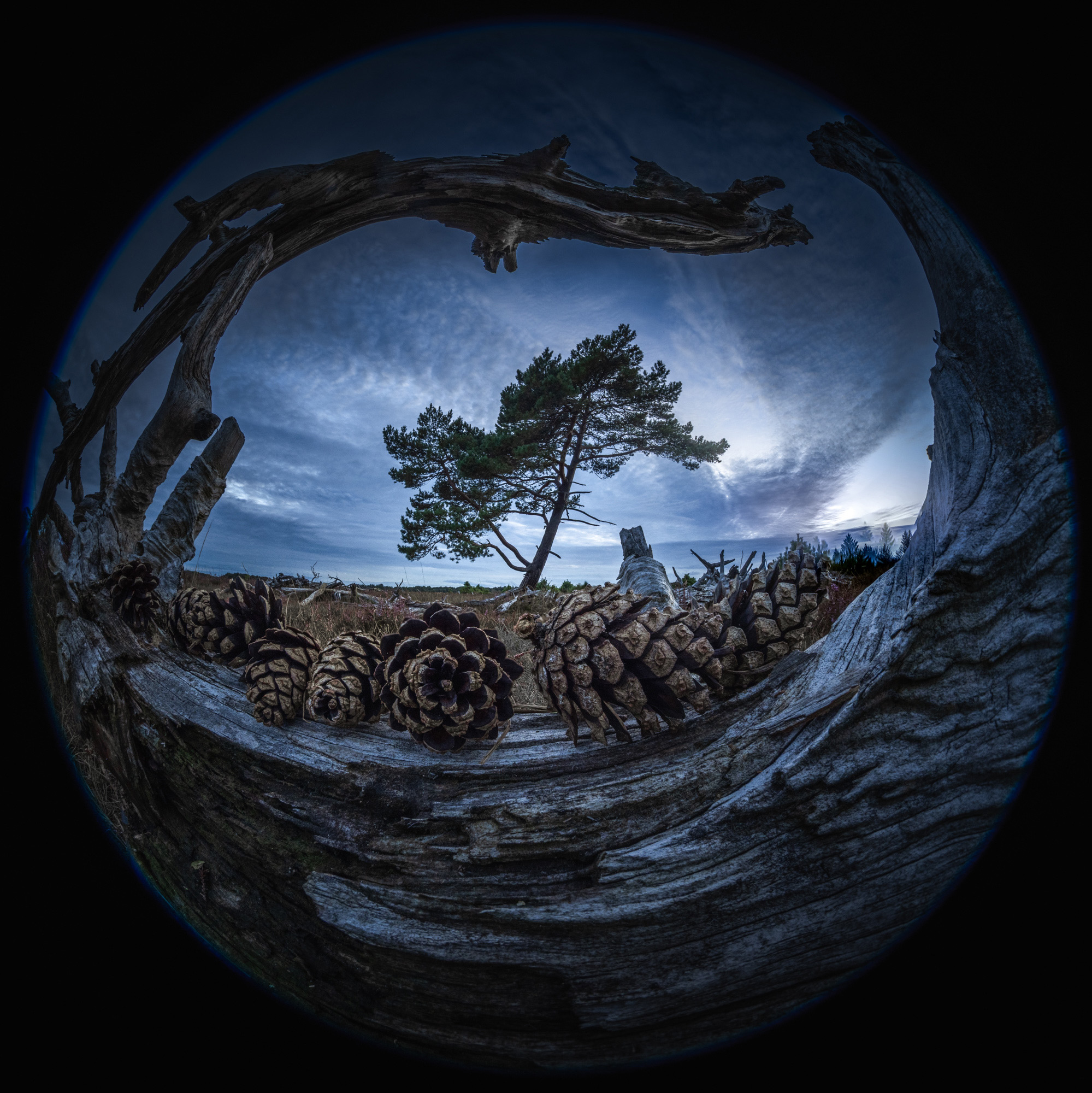 © Albert Dros | Sony α7R VI + FE 8-14mm f/3.5 Fisheye G | 2s @ f/14, ISO 200
The Milky Way on Menorca
Last but not least, I took this lens to Menorca to photograph the Milky Way. The huge angle of view allowed me to frame a spectacular location together with the whole core of the Milky Way. If you look closely, you can even see a tiny person standing on the arch. This was taken during a meteor shower, which made it even more special.
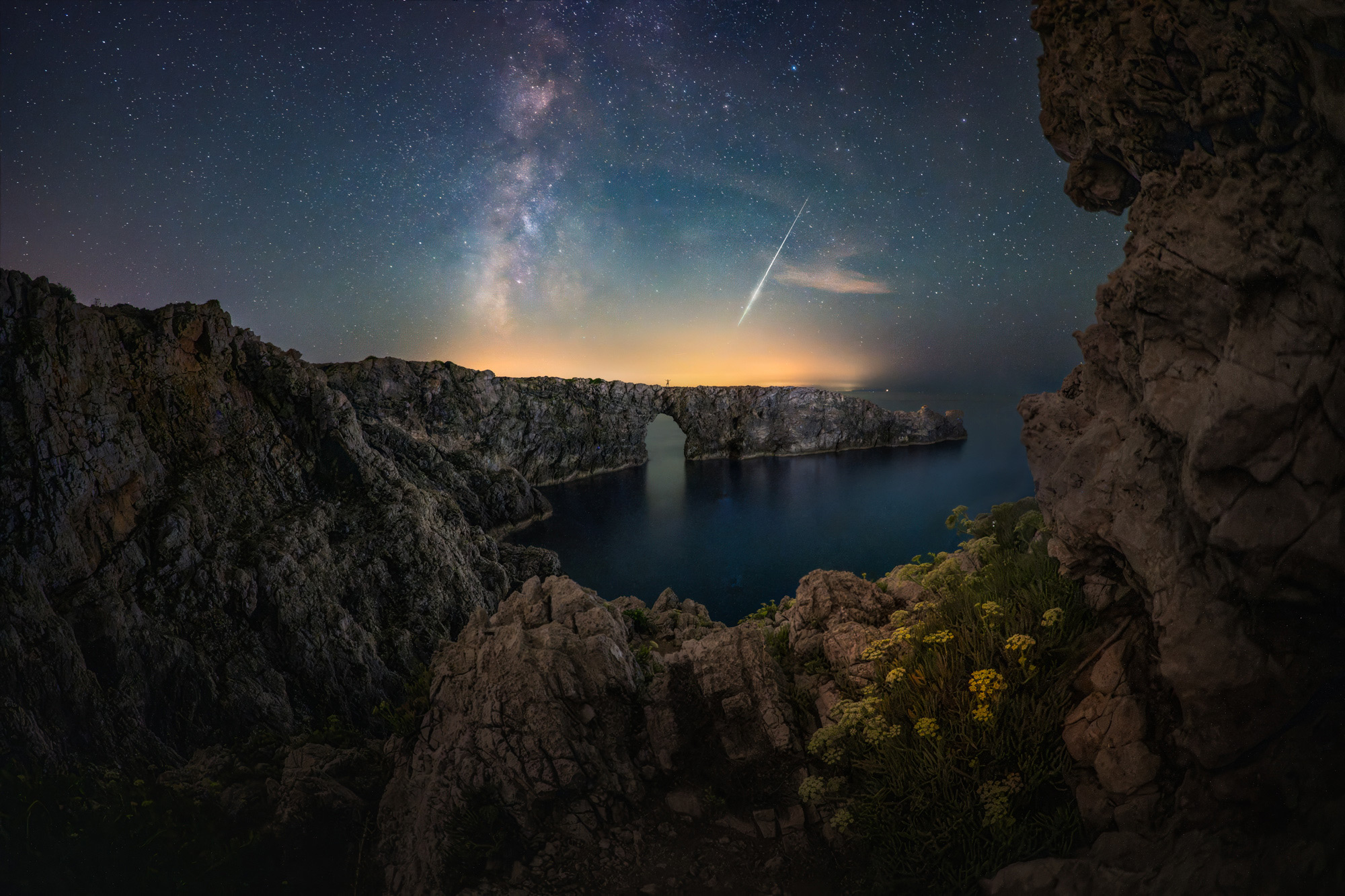 © Albert Dros | Sony α7R VI + FE 8-14mm f/3.5 Fisheye G | 25s @ f/3.5, ISO 6400
Having fun
For me, this lens is all about creativity and having fun. Honestly, I cannot remember having this much fun with a lens for a long time. It pushes you to try things, to experiment and to see the world differently.
Because it is so light, Sony has made a very practical creative tool. It can simply stay in my bag without me noticing it is there. And when the opportunity appears for that special extra shot, I always have it with me.
Featured products


Albert Dros | Netherlands
"I am obsessed with getting the perfect shot"


