
Underwater Macro
Pietro Formis
For Pietro Formis, photography was not the beginning of his journey, nor is it the end. Instead, it’s a thread running through his wildlife experience, preserving his discoveries, and guiding him on to new revelations and new objectives. All the while, his portfolio swells with amazing sea creatures, each captured with vibrant colour and breathtaking detail.
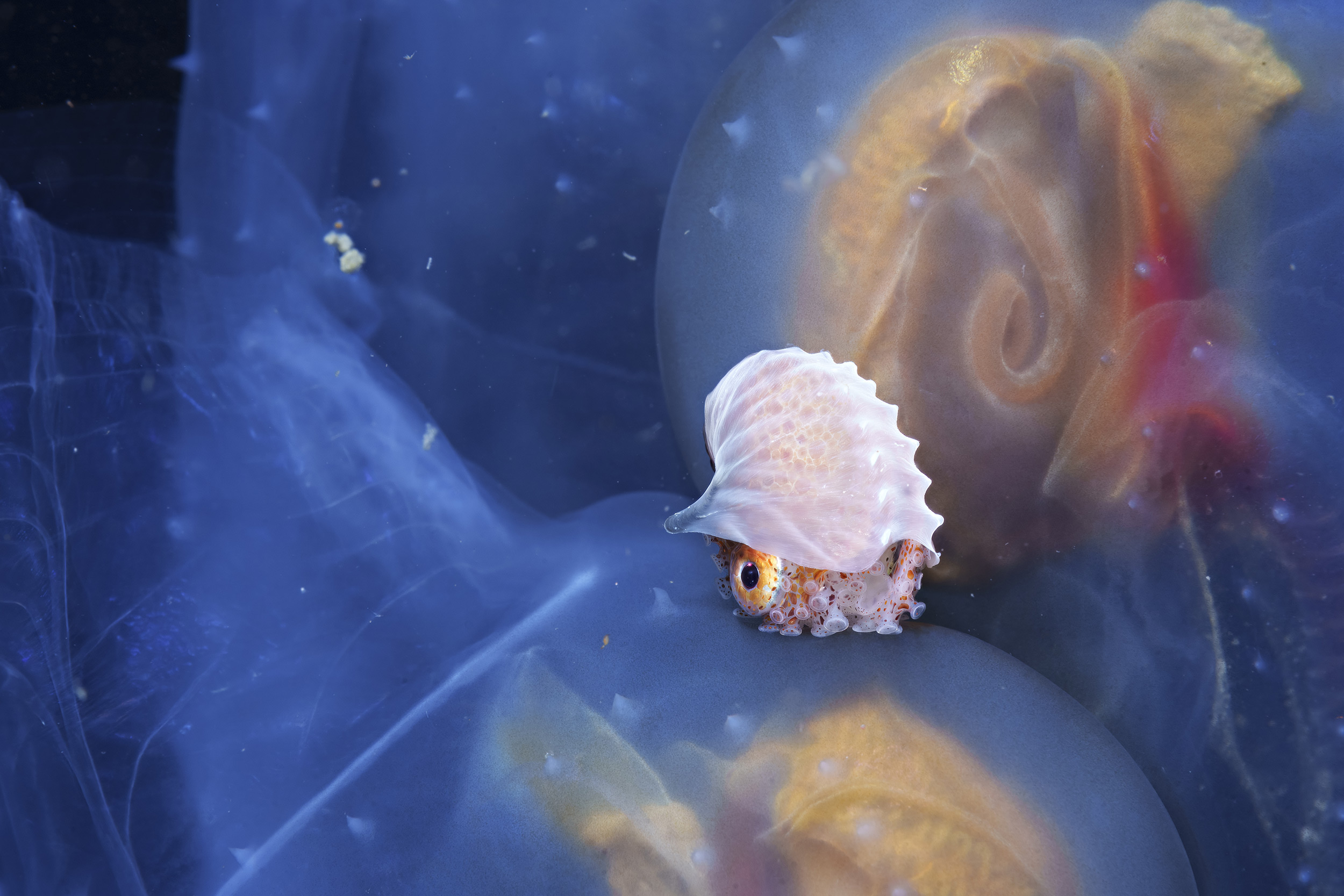 © Pietro Formis | Sony α1 + FE 90mm f/2.8 Macro G OSS | 1/320s @ f/18, ISO 500
Pietro’s first experiences below the waves came when he was invited by his father on a scuba course, but photography brought a new dimension. “When you start diving, you witness an amazing, alien world,” he says, “but it comes to life with photography. That’s an essential part of the thrill. Every time you hit the shutter, you see something special. Something previously unseen. Vibrant, unexpected explosions with the strobe lighting. It’s magical.”
Anyone who’s experienced the joy of discovery that macro lenses deliver will recognise the same in Pietro’s work, and along with the complexities of using them underwater, there are similarities, he says. “Just like on land, there are places where you can find hundreds of subjects within a square metre of the ocean floor. Reefs are like miniature forests to explore. Life is everywhere, for now at least.”
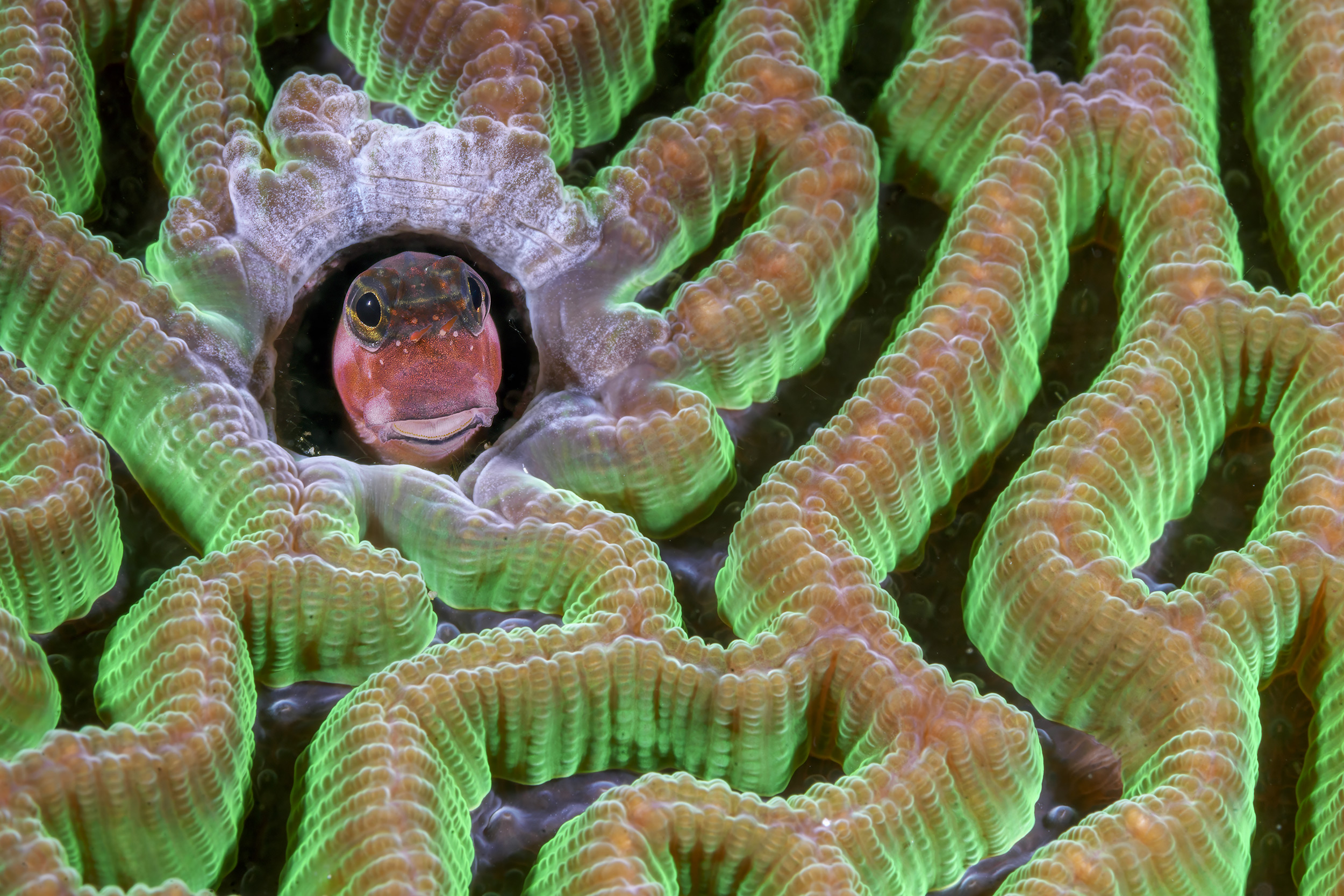 © Pietro Formis | Sony α1 + FE 90mm f/2.8 Macro G OSS | 1/400s @ f/20, ISO 250
“The difficulty of photographing underwater is that of course you can’t change lenses, and as I said, you need to add light to make colours visible, because from 10 metres down, all you see is monochrome blue. Also, while terrestrial macro photographers can use focus stacking, we must do it all in one shot. Everything is in motion, the photographer, the subject and the water.”
Fortunately, the principles of flash photography make freezing motion relatively simple under the waves, he explains. “One of the fundamentals of underwater photography is understanding how flash lighting relates to natural light. If you master this, you can control everything and even get creative.”
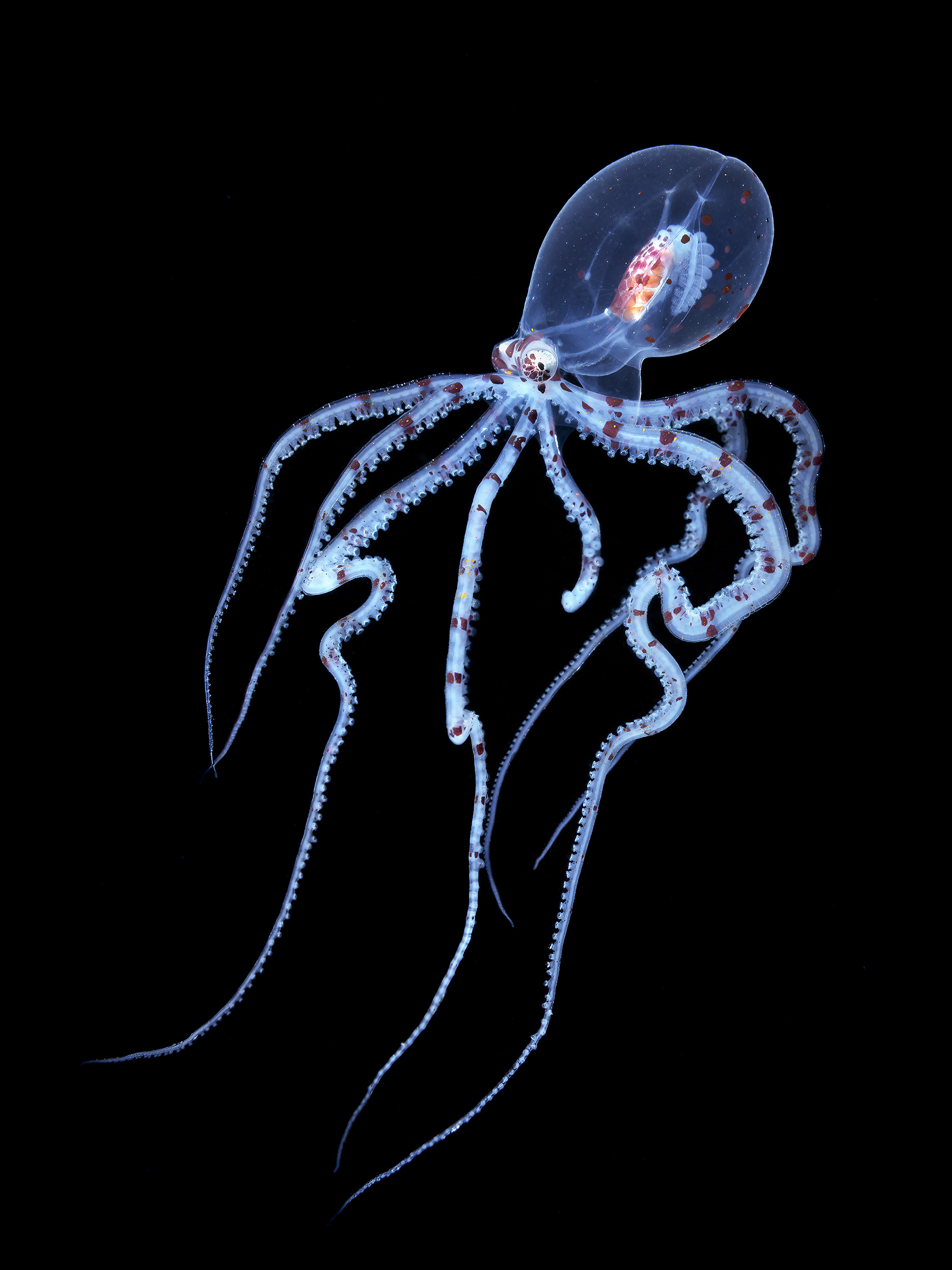 © Pietro Formis | Sony α1 + FE 50mm f/2.8 Macro | 1/400s @ f/16, ISO 800
“While on a dive, we use continuous light from torches to navigate, find subjects, and focus, it’s the flash duration that’s important in the sharpness of the image,” he continues. “That duration could typically be 1/1000sec and because of the small aperture settings used, for instance, the available light isn’t recorded and it’s only the flash that’s picked up during the exposure. Therefore, it effectively becomes the shutter speed, stopping the motion of the photographer and the subject dead in the water.”
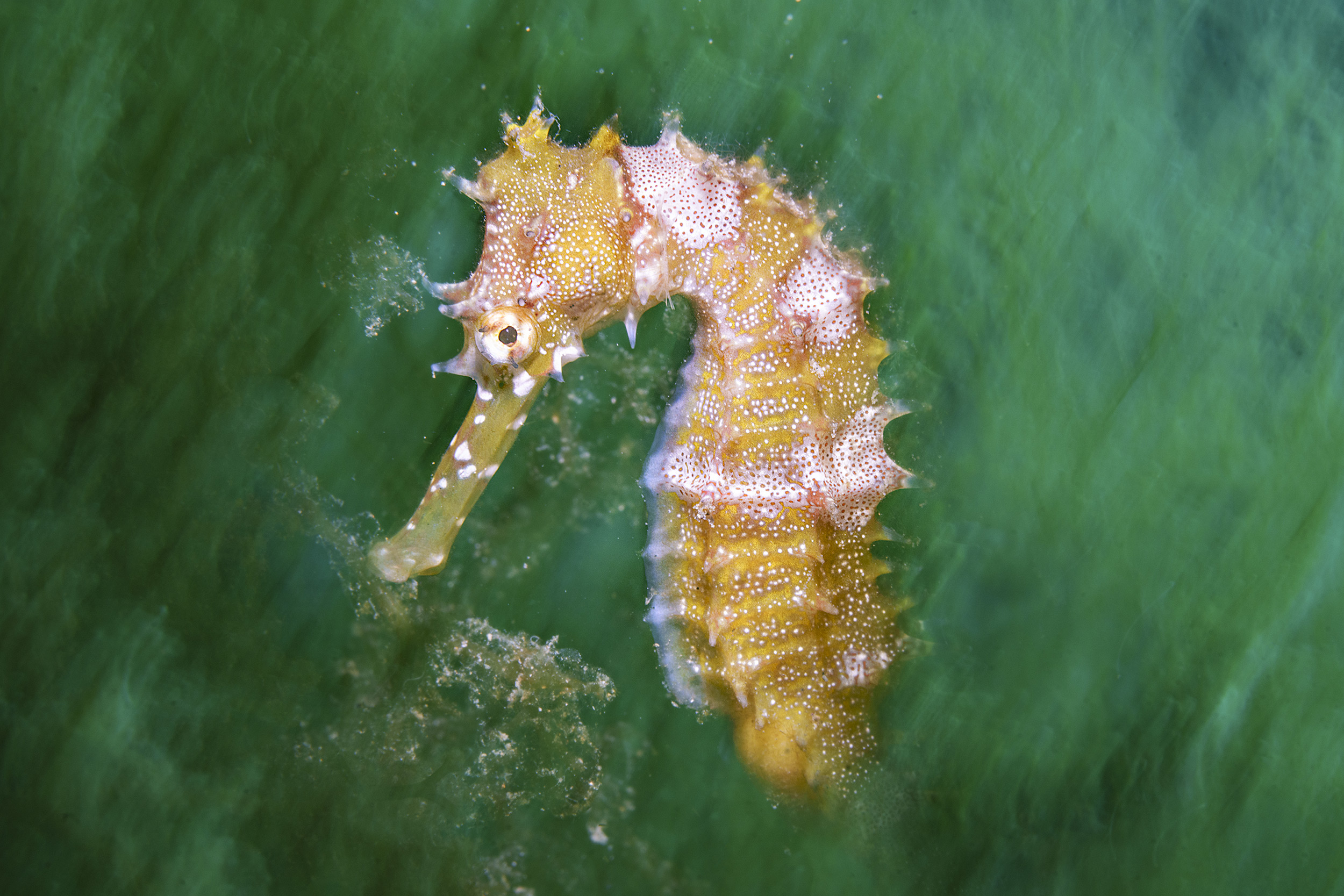 © Pietro Formis | Sony α1 + FE 90mm f/2.8 Macro G OSS | 1/5s @ f/20, ISO 320
Pietro also plays with the relationship between flash and available light to add motion and colourful backgrounds in his images, he says. “Looking for the right background is half the battle in macro composition. One way to do it is to mix the torch light or the natural light with the flash. For that, I use an exposure like f/18 at 1/5sec and ISO 400. This records both the available light and the flash, illuminating up things like green algae, but still freezing the subject.”
Using a Sony Alpha 1 within a waterproof housing to make these images, Pietro says the benefits of the flagship model are clear. “When I moved to a mirrorless camera, the Alpha 1 was the first choice,” he explains. “The main reason was its incredible autofocus. Even with subjects moving with the current, it stays locked onto the subject. That helps enormously in composition, because I can reframe without ever losing focus.”
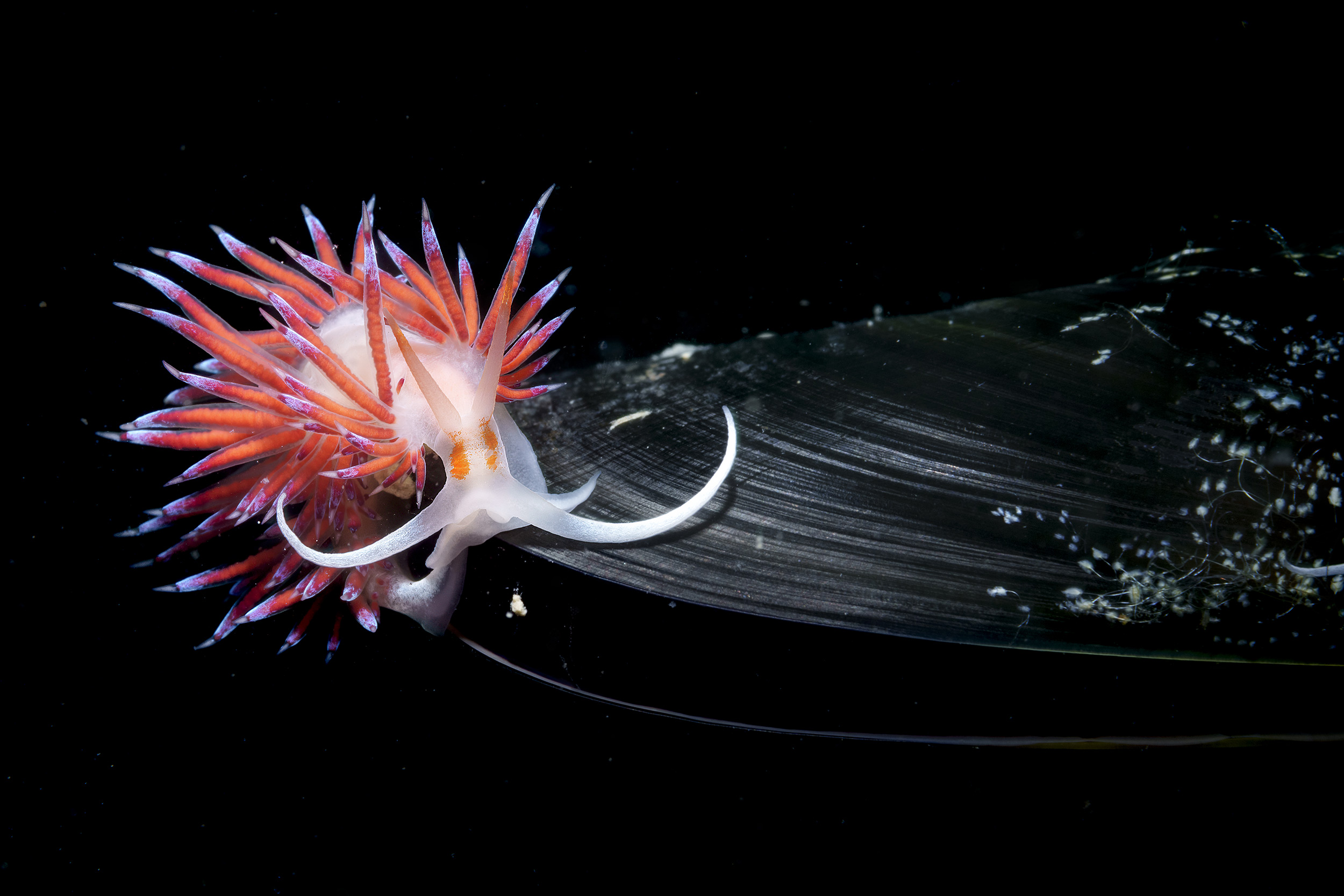 © Pietro Formis | Sony α1 + FE 90mm f/2.8 Macro G OSS | 1/60s @ f/18, ISO 200
Pietro also uses the camera’s intuitive live view to judge his more creative exposures. “The preview it gives of the available light makes understanding the mix of it and the flash very easy,” he explains. “I also love the 20fps burst mode, because underwater the angles are always changing and it means I have all the options I need.”
Similarly, the Alpha 1’s 50.1 MP resolution helps him achieve better images. “The detail from the camera is fabulous,” he agrees, “but what’s really great is that I can easily crop from horizontal to vertical framing without losing too much quality. Otherwise, the flashes need to be reorientated as I turn the camera, costing valuable seconds.”
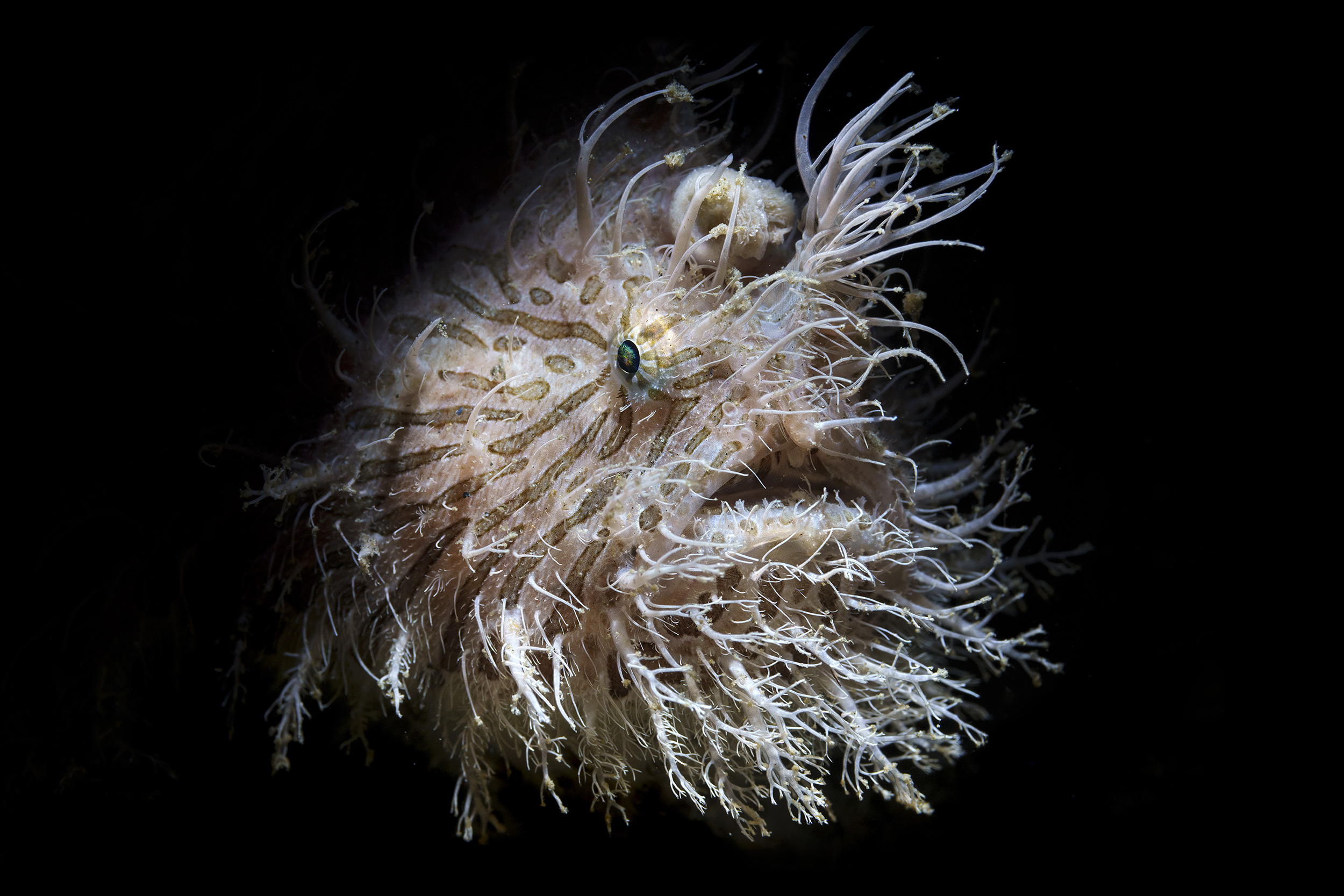 © Pietro Formis | Sony α1 + FE 90mm f/2.8 Macro G OSS | 1/400s @ f/11, ISO 800
Pietro relies on the FE 90mm f/2.8 Macro G OSS for its fast autofocus and impressive sharpness at the small apertures typical of underwater macro work. He has also begun using the new FE 100mm f/2.8 Macro GM OSS, an evolution of the 90mm and exceptionally well suited to the water, offering 1.4:1 magnification, compatibility with 1.4x and 2x teleconverters, and superior low-light AF. He believes it will become a key tool in his macro photography.
“Although I began photographing the marine world as a way of recording what I saw, now the images have become a pathway to knowledge and conservation,” he finishes. “Each time I photograph something, I want to find out more about it… and that is the first step in preservation. Step by step, you learn about the wildlife, the eco-systems, the sub-sea landscape… year by year, photo by photo you learn to love nature more.”


